


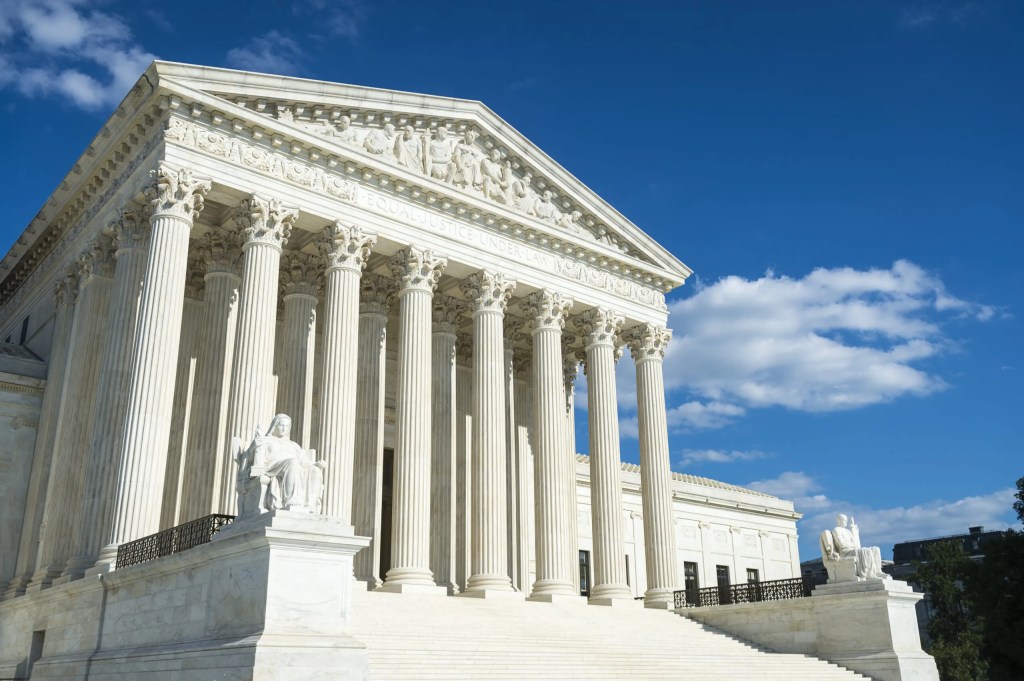
The Judicial Branch plays a crucial role in maintaining the balance of power within the U.S. government. Its primary function is to interpret the Constitution and ensure that laws and actions by the legislative and executive branches align with it. This system of checks and balances is designed to prevent any one branch from becoming too powerful. For example, the judiciary can strike down laws passed by Congress if they are deemed unconstitutional or rule against executive actions that overstep legal boundaries. This ensures that the principles of democracy and the rule of law are upheld.
Our Founding Fathers fought a revolutionary war to break away from the British monarchy—starting with the battles of Lexington and Concord in April 1775—to prevent a monarchy from taking hold in the new nation. Yet now we face a man attempting to usurp power from all branches of government and position himself as the first monarch of the United States.
The Founding Fathers envisioned a government with three distinct branches: executive, legislative, and judicial. Each branch was granted specific powers and responsibilities, along with mechanisms to check and balance the others. This design was intended to prevent any single branch from accumulating excessive power, ensuring accountability and preserving the principles of democracy. At its core, this system serves as the guardian of justice, liberty, and constitutional law, embodying the Founders’ commitment to a fair and enduring government.
Unfortunately, the GOP has prioritized political survival over their constitutional duty, and members of the legislative branch have effectively ceded power to Donald Trump. This deference, driven by concerns about upcoming primary elections rather than a commitment to defending the Constitution and the country, has rendered the legislative branch increasingly irrelevant in its role as a protector of constitutional principles. This shift undermines the system of checks and balances that is fundamental to the nation’s democracy, leaving it up to the judicial branch to uphold these principles.
The Judicial Branch must uphold and safeguard the Constitution, ensuring that executive orders and legislation adhere to its principles, even those issued by President Trump. The courts—comprising lower courts, appellate courts, and the Supreme Court—are tasked with impartial interpretation of the law, preventing any actions that could undermine the values and framework of the Constitution. This vital role reinforces the checks and balances designed to protect democracy and ensure justice within the U.S. government system.
The following individuals seem to believe that Trump has the power to disobey the Constitution and the courts: Donald Trump himself, Elon Musk, Pam Bondi, Jim Jordan, Nancy Mace, Kash Patel, and Dan Bongino. Let me clarify something, especially for Jim Jordan: The judiciary is an equal branch of government, just like the legislative and executive branches. Each branch operates independently, with no control over the others. Jim Jordan seems to believe that the legislative or executive branches can control the judicial branch. However, it is important to emphasize that the judiciary’s independence is a cornerstone of democracy, and any attempts to control or undermine it would face significant constitutional and legal scrutiny
As for Donald Trump: Get over it. Our Founding Fathers foresaw individuals like you who would attempt to crown themselves king of the United States. That’s precisely why they established the system of checks and balances—to prevent such ambitions from ever becoming a reality.
 Mentonym Express