


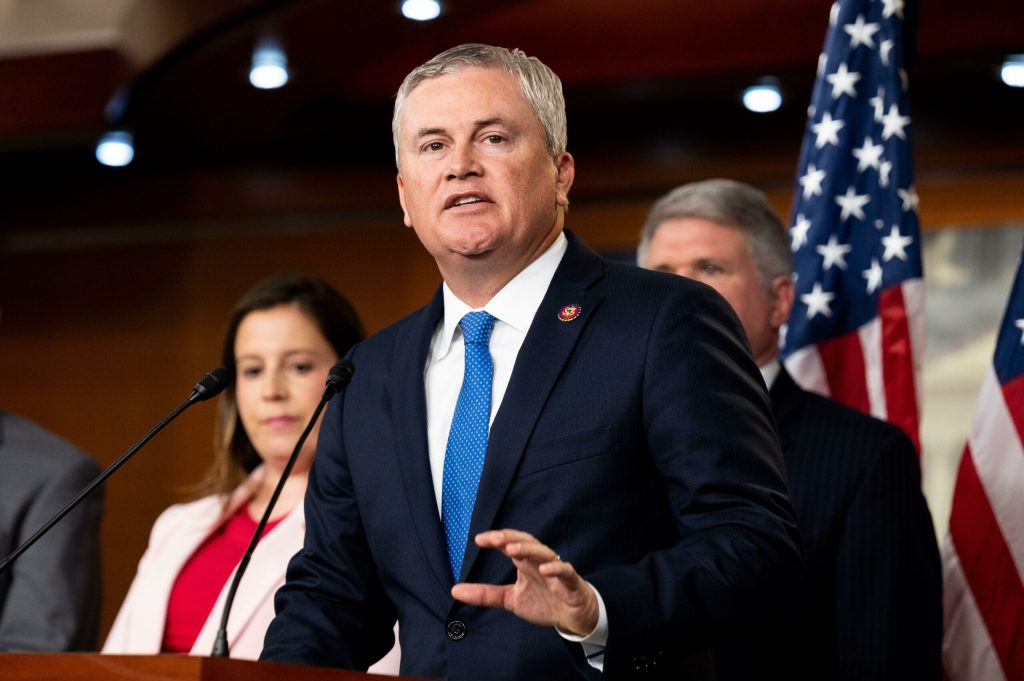
Is Comer Putting Party Over People? His Votes Tell the Story
Rep. James Comer may have cruised to victory in the 2024 election, but the growing chorus of discontent across Kentucky’s 1st Congressional District paints a far more divided picture. Voters and local leaders now say his wide margin at the polls masks a troubling disconnect—a record of policy decisions, financial interests, and civic silence that no longer serves those who trusted him to lead.
Comer received 252,534 votes last November, securing 74.7 percent of the district’s support. His challenger, Democrat Erin Marshall, earned 85,494 votes, or 25.3 percent. Though the result reaffirmed Comer’s hold on the seat, more than 85,000 residents actively rejected his platform, and a steadily growing number of independents now echo their concerns.
Healthcare remains a flashpoint. Comer repeatedly voted to slash Medicaid and roll back Affordable Care Act protections, even as over 230,000 district residents depend on Medicaid for coverage. Providers warn that clinics are struggling to stay afloat, and families face longer wait times and fewer options for basic care. The message from rural medical professionals is clear: these decisions aren’t theoretical—they’re closing doors.
Farmers, long considered the backbone of the region, say they’ve been left exposed. Federal data shows that district producers received more than $1.2 billion in agricultural aid between 1995 and 2023. Yet Comer’s support for destabilizing trade policies and reductions in subsidies has deepened economic uncertainty. One farming family described the current landscape as “weathering political storms without an umbrella.”
Education is another sore point. Comer has consistently opposed expanding Title I school funding, nutrition programs, and special education resources, despite schools depending on roughly $220 million each year in federal aid. Teachers continue to report burnout, overcrowded classrooms, and limited student support. At a recent community forum, one educator summed it up bluntly: “We’re stretched, underfunded, and invisible.”
Environmental concerns have added fuel to the fire. In 2025, Comer voted to repeal key Clean Air Act regulations, removing limits on mercury, methane, and greenhouse gases. His district includes facilities such as Westlake Vinyls Inc., previously fined for violations and ordered to invest $110 million in pollution control. Compounding the criticism is Comer’s ownership of stock in Westlake Chemical—the parent company of Westlake Vinyls—as well as stakes in Palantir Technologies, AT&T, and Bank of America. Ethics watchdogs say the overlap between his portfolio and policymaking poses serious questions.
But perhaps the loudest complaint from constituents isn’t a policy—it’s his silence. Comer has not held a public town hall since May 29, 2018, in Fulton, Kentucky. More than seven years have passed without an open forum. In early 2025, frustrated citizens protested outside his Paducah office, many dressed in chicken costumes to symbolize his refusal to appear publicly. Comer’s office dismissed the demonstration, stating he wouldn’t host “therapy sessions for left-wing activists.”
Yet those voices are not fringe activists—they represent more than one in four voters in the district, not including the swelling ranks of independents who now say they feel ignored. Their concerns span political divides, bound together not by party, but by shared frustration.
“Comer may dominate the ballot box—but he’s invisible where it matters: here at home,” said a community advocate in Mayfield. “We expect representation, not reruns of Washington talking points.”
With the 2026 election cycle now on the horizon, Kentucky’s 1st District is confronting a difficult question: Can a representative continue to claim support while avoiding scrutiny, and how long will voters wait for answers that never come?
To protect our democracy from Trump and the GOP, let’s unite behind Democrats and independents who champion progress and a brighter future. Your vote matters—it’s your voice, your vision, your future to drive change. Let’s make it happen.
References
- Kentucky State Board of Elections: 2024 General Election Results
- Medicaid Enrollment Data: Centers for Medicare & Medicaid Services (CMS)
- USDA Farm Subsidy Database, Environmental Working Group (1995–2023)
- Congressional Budget Office: Appropriations for Title I and Education Programs
- EPA Enforcement Actions Against Westlake Vinyls Inc.
- House Committee Reports on the Rescissions Act of 2025
- Public financial disclosures via Office of Congressional Ethics
- Local media coverage: WPSD-TV (Paducah), Kentucky Lantern, Louisville Courier Journal
- Protest documentation: Paducah Sun archives, May 2025
- Field interviews conducted in Graves and Calloway counties, March–June 2025
 Mentonym Express