



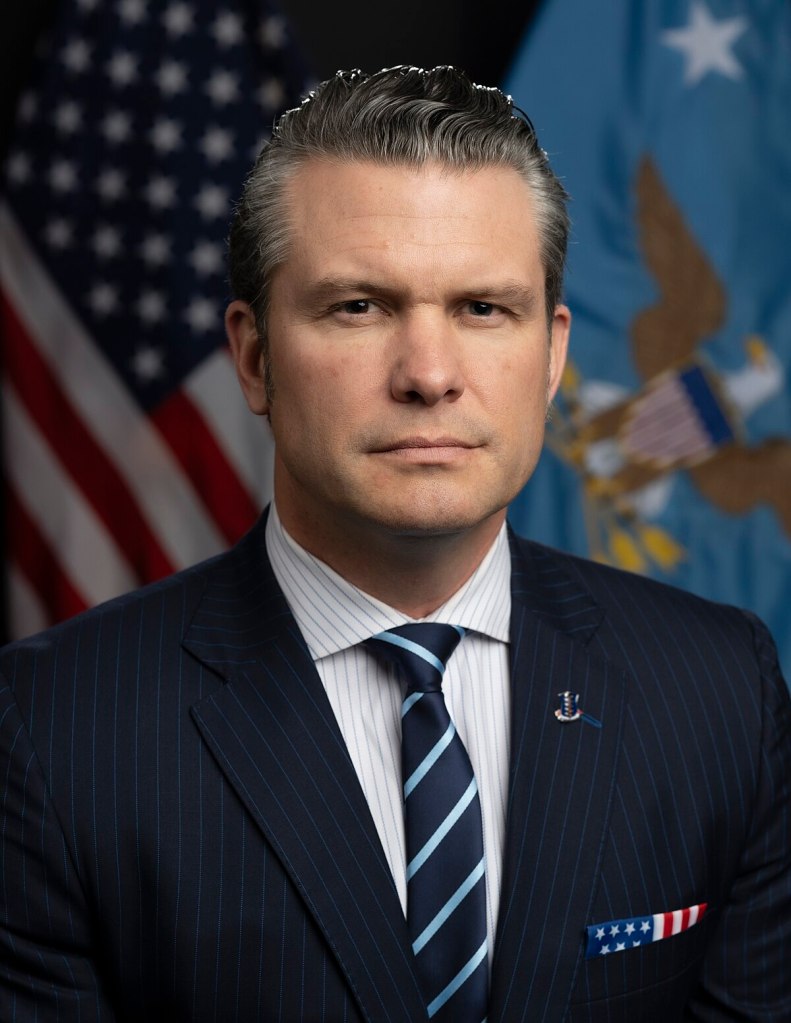

In a leaked internal memo obtained by investigative sources, the Department of Homeland Security outlines a sweeping plan to embed military personnel within civilian immigration agencies, construct detention centers on military bases, and treat transnational criminal organizations as equivalent to terrorist groups like Al Qaeda. The memo, authored by Philip Hegseth—a senior adviser to DHS Secretary Kristi Noem and the brother of Defense Secretary Pete Hegseth—has ignited alarm among legal scholars, historians, and civil liberties advocates, who warn that it could mark a dangerous pivot toward militarized governance.
The July 21 meeting referenced in the memo brought together top officials from DHS and the Pentagon, including the Chairman of the Joint Chiefs and the Commander of NORTHCOM. The stated goal was to generate “new ideas” for joint operations in “defense of the homeland.” But the language of the memo suggests far more than brainstorming. It proposes long-term institutional shifts, including the placement of military planners inside ICE and CBP, and the construction of detention infrastructure on military bases “for years to come.”
Civil liberties experts say the memo’s framing treats domestic immigration enforcement as a battlefield operation. Carrie Lee of the German Marshall Fund warned, “The military is the most powerful, coercive tool our country has. We don’t want the military doing law enforcement. It absolutely undermines the rule of law.”
The memo also emphasizes secrecy, stating: “Due to the sensitive nature of the meeting, minimal written policy or background information can be provided.” This deliberate avoidance of documentation has drawn comparisons to historical regimes that used legal ambiguity to consolidate power.
Historians point to two chilling precedents. In Chile, General Augusto Pinochet’s 1973 coup dismantled a constitutional democracy and replaced it with a military dictatorship that embedded armed control across all sectors. Over 3,000 people were killed or disappeared, and tens of thousands were tortured. The justification was national security—precisely the rationale echoed in the DHS memo.
In Germany, the collapse of the Weimar Republic came not through a coup but through legal manipulation. Emergency powers under Article 48 allowed Chancellor Brüning to bypass parliament, paving the way for Hitler’s rise. The DHS memo’s reliance on verbal agreements and its bypassing of written policy mirror this pattern: legal ambiguity exploited to dismantle democratic norms from within.
“This is not just a bureaucratic overreach,” said one constitutional scholar. “It’s a blueprint for authoritarian drift.”
The memo’s proposals, if implemented, would erode civilian authority, weaken the rule of law, and collapse democratic accountability. Experts warn that the normalization of military presence in civilian life—especially under the pretext of immigration enforcement—could permanently alter the balance of power between the executive branch and the public.
Calls for immediate oversight are growing. Civil society groups are demanding complete transparency. Lawmakers are being urged to investigate the origins and implications of the memo. Journalists are being asked to reject euphemism and confront the threat directly.
Unchecked bullying, whether by individuals or institutions, does not self-correct. It escalates. And when wielded by the state, it becomes a mechanism for authoritarian control. The time to act, experts say, is not when the tanks roll in. It is when the memo is drafted.
References:
- The New Republic: Department of Homeland Security Memo
- MSN: Trump’s Domestic Use of Military Set to Get Worse, Leaked Memo Shows
- Common Dreams: Leaked Hegseth Memo Suggests More US Troops on US Streets
 Mentonym Express