



Democracy doesn’t die in darkness. It dies in daylight—when the institutions built to defend it choose surrender over resistance.
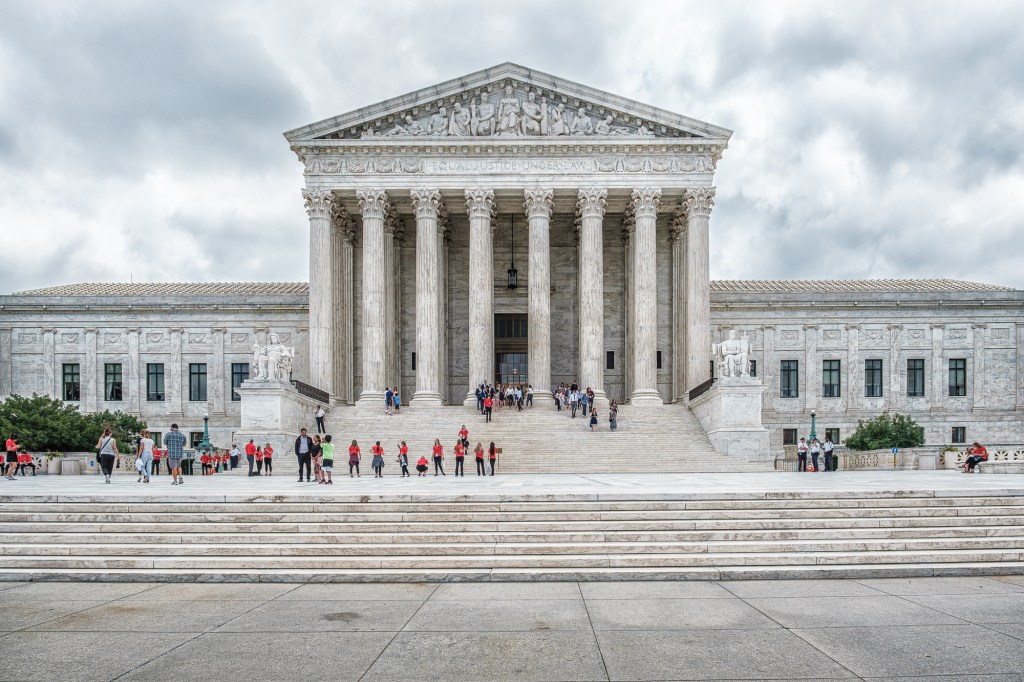
This summer, the U.S. Supreme Court handed President Donald Trump sweeping new powers to reshape federal agencies, override local governance, and enforce controversial executive orders with minimal judicial restraint. Legal scholars sounded the alarm. Congress and the Senate stood by, silent and complicit.
On July 23, the Court granted Trump’s request to purge Democratic appointees from the Consumer Product Safety Commission. The ruling, rooted in Trump v. Wilcox, elevated executive control over agency independence. Justice Kavanaugh went further, urging the Court to fast-track a broader precedent—one that would allow Trump to restructure federal institutions with near-total discretion.
Just one day later, the Court sided with Trump again, blocking NIH diversity grants and reinforcing his campaign to dismantle DEI initiatives across the federal government. In Trump v. CASA, the Court refused to halt his executive order targeting birthright citizenship, allowing it to proceed despite clear constitutional concerns.
These rulings weren’t isolated. They formed a pattern. The Court upheld bans on transgender care, religious opt-outs in schools, and age verification laws for adult content—all reinforcing conservative state power and executive reach.
Legal experts called it judicial surrender. They were right. But the Court isn’t alone.
Faced with a presidency consolidating power, Congress has failed to mount any meaningful resistance. No emergency hearings. No legislative countermeasures. No coordinated pushback. The Senate, once a chamber of fierce debate, has become a graveyard of accountability. Key committees refuse to investigate. The majority leaders cite “respect for judicial independence” while ignoring their constitutional duty to check power.
Even moderate voices have gone quiet, fearing political backlash or primary challenges. The result? A legislative branch that has effectively outsourced its authority to the executive and judiciary.
This isn’t just a constitutional crisis—it’s institutional collapse. The presidency is emboldened. The judiciary is deferential. The legislature is inert.
So yes—witness the destruction of our democracy. Not through tanks or riots, but through rulings, motions, and silence. The Supreme Court swings the hammer. Congress drops the shield. The Senate folds the map.
And Trump builds.
References
- Supreme Court ruling on Trump v. Wilcox, July 23, 2025
- Supreme Court decision in Trump v. CASA, July 24, 2025
- NIH diversity grant injunction, July 2025
- Executive order on birthright citizenship, upheld July 2025
- State-level bans on transgender care and DEI programs, affirmed by SCOTUS, Summer 2025
- Senate Judiciary Committee inactivity reports, July–August 2025
- Statements from Justice Kavanaugh on agency restructuring, July 2025
- Congressional response logs, July–August 2025
 Mentonym Express