


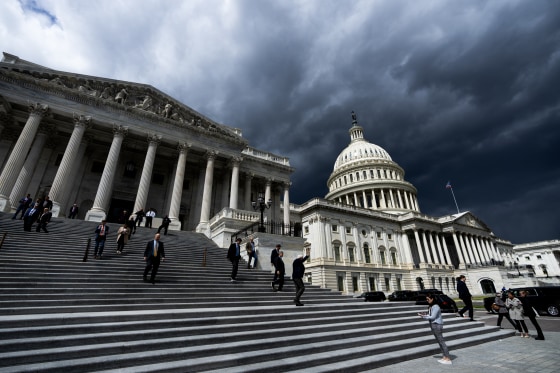
Imagine waking up to find the President has taxed your business into oblivion—without a single vote from Congress. That’s not a hypothetical. That’s Trump’s tariff regime. And now, the Supreme Court is poised to decide whether one man can rewrite global trade policy, bypass Congress, and call it “national security.” If they rule in his favor, it won’t just be a legal technicality—it’ll be a constitutional collapse.
On November 5, the Court will hear arguments challenging Trump’s sweeping tariffs imposed under the International Emergency Economic Powers Act (IEEPA). These include so-called “fentanyl tariffs” targeting China, Canada, and Mexico, as well as “reciprocal tariffs” imposed on nearly 100 countries with blanket levies of 10–50%. The justification? Trade deficits and drug trafficking. The method? Executive fiat. No vote. No debate. Just raw power.
A federal appeals court already ruled that IEEPA doesn’t authorize tariffs. Why? Because the Constitution gives Congress—not the President—the power to tax. If the Supreme Court reverses that ruling, it sets a precedent that undermines the separation of powers and empowers the executive branch with a fiscal sledgehammer.
If the Court strikes down the tariffs, the Treasury could be liable for up to $1 trillion in refunds to importers. If it doesn’t, the government stands to collect $2.2 trillion in tariff revenue through 2035—without a single vote cast. Consumers won’t see relief either way. Businesses have already absorbed the costs or passed them upstream. The damage is done. The precedent is the real threat.
This case is a test of the Major Questions Doctrine, the same principle the Court used to strike down Biden’s student loan forgiveness. That doctrine says presidents can’t make sweeping economic moves without explicit congressional authorization. If the Court abandons it here, it will open the floodgates for executive overreach in every domain—immigration, climate, digital policy, and even domestic taxation.
Trump’s legal team argues that lifting the tariffs would cause “irreparable harm” to national security and foreign policy. But that’s not a legal defense. That’s a political smokescreen. It’s the same playbook used to justify surveillance, war powers, and emergency declarations. Wrap it in “security,” and hope no one notices the power grab.
If the Court blesses this maneuver, here’s what comes next: presidential economic war powers become the norm. Any future president could impose taxes, tariffs, or sanctions under the guise of vague emergency claims. Congress loses its grip on taxation. The firewall between executive impulse and fiscal reality collapses. Global trade instability follows. Allies and adversaries face unpredictable tariff regimes. Retaliation escalates. Supply chains fracture. Legal precedent for executive overreach has been established. Emergency powers become a backdoor for unilateral policymaking. Economic weaponization of foreign policy becomes a standard practice. Tariffs become tools of coercion, not diplomacy. Domestic political chaos erupts. Businesses face constant uncertainty. Courts drown in refund claims. Voters lose trust. The Constitution becomes a suggestion—not a safeguard.
This isn’t trade policy. It’s economic authoritarianism dressed up as national defense. It’s a blueprint for fiscal dictatorship.
But here’s the truth Congress doesn’t want you to remember: it isn’t powerless—it’s polluted. If voters clean house and remove the obstructionist garbage in Congress, lawmakers can absolutely reassert their authority. They can reclaim taxing power by passing legislation that limits the scope of IEEPA. They can override executive tariffs through the Congressional Review Act. They can reinforce the Major Questions Doctrine with statutory guardrails. They can investigate and expose the fallout of Trump’s tariff regime. They can mobilize public pressure to restore constitutional integrity.
And if we take back Congress, the Senate can do what it was built to do: hold the executive accountable. The Constitution gives the Senate the power to remove a president who abuses his office. If the Supreme Court hands Trump unchecked economic power, it’s up to the Senate to check it. Removal isn’t just a possibility—it’s a constitutional remedy. And it may be the only way to save our democracy from sliding into dictatorship.
Congress isn’t broken. It’s infested. Remove the garbage, and we can restore the firewall between presidential impulse and economic reality. We can rebuild the checks and balances that keep tyranny in check. We can clean up the Trump mess and begin repairing the damage done to our institutions, our economy, and our global credibility.
This case isn’t just about tariffs. It’s about whether one man can tax the nation, destabilize global trade, and claim it’s for “security.” If the Supreme Court blesses this, it sets a precedent that future presidents will exploit. The stakes aren’t theoretical. They’re trillion-dollar real.
So let’s be clear: this is a referendum on the future of American governance. Do we want to live in a democracy, where power is checked, debated, and accountable? Or do we want to live in a dictatorship, where one man can tax, punish, and destabilize with a signature?
If you think presidents shouldn’t play God with your wallet, share this. If you believe Congress should act like a branch of government, not a doormat, vote accordingly. If you believe in the Constitution, this is your line in the sand.
And if you feel exhausted, disillusioned, or overwhelmed by the chaos—know this: you are not alone. Millions of Americans are ready to fight for a government that serves the people, not itself. We’ve been gaslit, overruled, and sidelined—but we are not powerless. We are the firewall. We are the last line of defense. And we are the ones who decide whether this country remains a democracy or becomes a dictatorship.
Let that be your fuel. Let that be your fire. Let that be your reason to vote, to speak, to organize, and to rise.
Sources:
Yahoo News – Supreme Court to hear Trump’s tariffs case
MSN – Will the Supreme Court treat Trump’s tariffs like Biden’s policies?
MSN – Supreme Court to hear Trump tariff arguments Nov. 5
MSN – If the Supreme Court rules against Trump tariffs
MSN – Supreme Court Sets Date to Hear Trump Tariff Case
SCOTUSblog – The Supreme Court and Trump’s tariffs: an explainer
Congressional Research Service – Legal Sidebar on IEEPA Tariffs
Holland & Knight – Court of Appeals Strikes Down IEEPA Tariffs
 Mentonym Express