


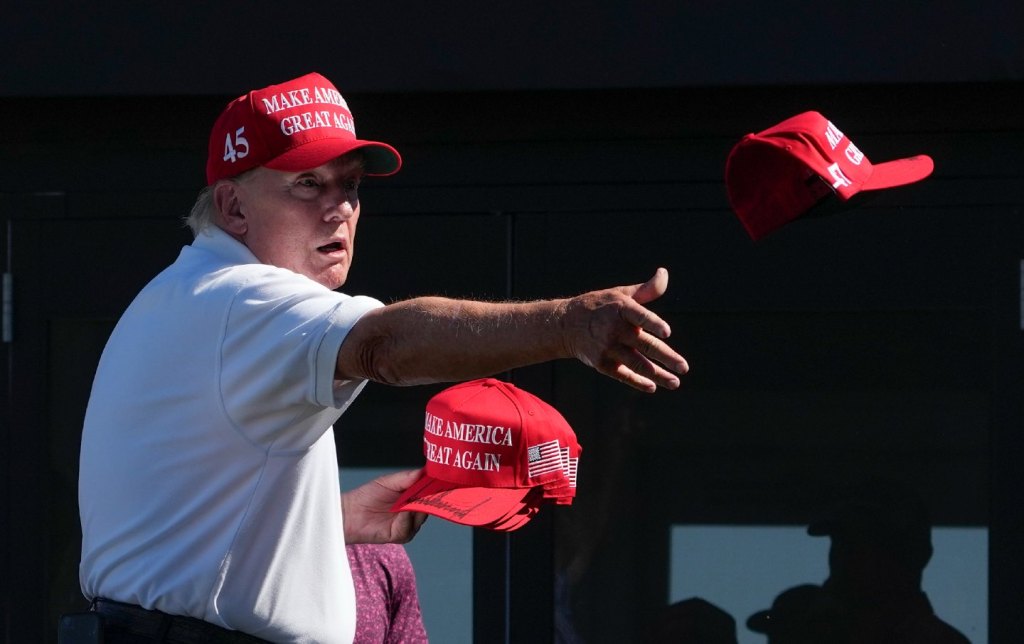
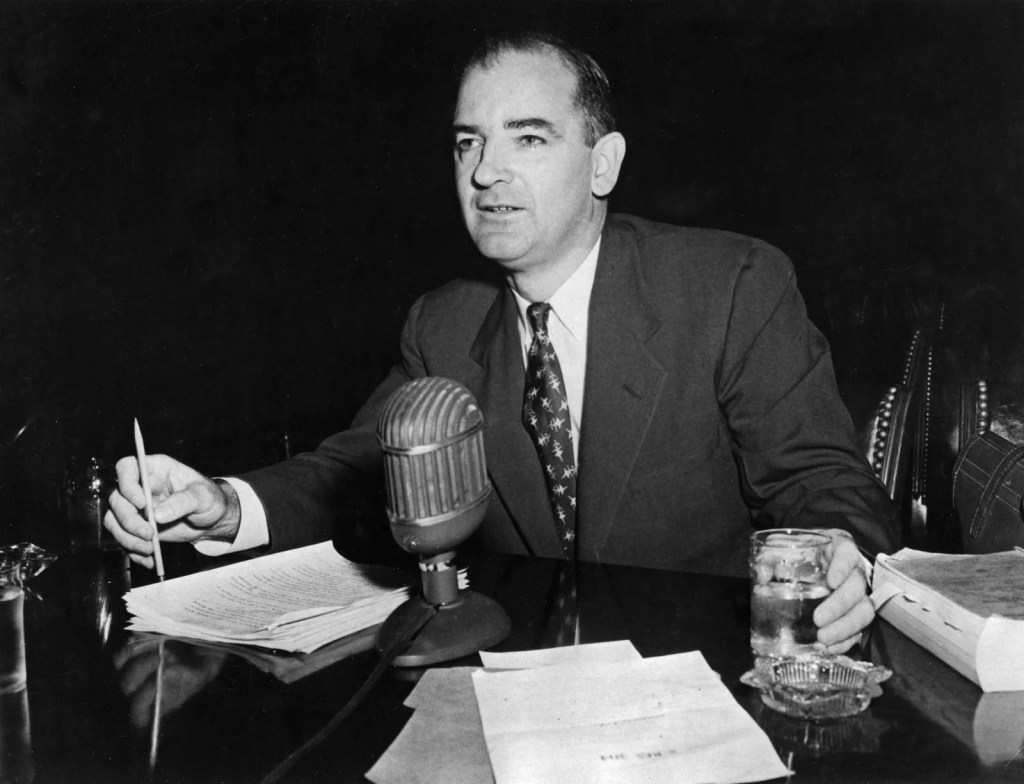
Across the country, a quiet revolution is underway. In states long considered Republican strongholds—Virginia, New Jersey, Connecticut, New York—voters are choosing a different path. They’re not just casting ballots. They’re taking a stand. They’re declaring: we will not be ruled by fear. The Trumpist movement, once dominant, is unraveling. And if history is any guide, we’ve seen this kind of reckoning before.
In the 1950s, Senator Joseph McCarthy built his power on fear. He accused Americans of being traitors, communists, infiltrators. Careers were destroyed. Families torn apart. Institutions hollowed out. But eventually, the public saw through it. Televised hearings exposed the cruelty. Within months, McCarthy was censured. His name became a cautionary tale.
Now, Trumpism faces its own reckoning.
The 2025 elections weren’t just a blue wave—they were a red retreat. Democrats flipped governorships in Virginia and New Jersey, swept judicial races in Pennsylvania, and reclaimed mayoral offices in Republican-held cities like New Britain, Connecticut, and Cheektowaga, New York. Even rural counties that backed Trump in 2020 turned away from Trumpist-aligned candidates. This wasn’t a fluke. It was a moral stand. Voters rejected loyalty tests. They rejected conspiracy rhetoric. They rejected the erosion of democratic norms. And they did it in places where Trumpism once thrived.
McCarthy’s downfall came when the public saw the human cost of unchecked power. Trumpism’s unraveling may come the same way—through exposure, through courage, through the quiet bravery of everyday Americans who refuse to be silenced. This is not just a political shift. It’s a civic awakening.
Trump’s grip on the GOP is no longer absolute. It’s weakening under the weight of electoral losses, donor fatigue, and generational rejection. Republican operatives now quietly admit that his brand is becoming a liability in swing districts and suburban battlegrounds. Donors are hedging their bets. The party is splintering—some clinging to fear, others searching for a path forward.
Suburban independents are defecting. Gen Z voters are rising—not just against Trump, but against the entire framework of fear and exclusion. They’re fighting for reproductive rights, climate action, LGBTQ+ protections, and the integrity of democracy itself. This isn’t just ideological rejection—it’s generational renewal. A new coalition is forming—one rooted in truth, inclusion, and the belief that democracy is worth defending.
If Democrats sustain their 2025 momentum—flipping the House and expanding their Senate majority—Trumpism could meet the same fate as McCarthyism: not just electoral defeat, but moral discredit. And that matters. Because when fear loses its grip, hope takes root.
McCarthyism and Trumpism are cut from the same cloth. Both movements thrive on fear—not as a side effect of policy, but as a deliberate strategy to silence dissent and reshape public perception. Both rely on vague accusations, loyalty tests, and public punishment. Both target institutions that check power. And both collapse when the public sees the cost.
McCarthy exploited Cold War paranoia, claiming communists had infiltrated every corner of American life. His accusations were vague, unprovable, and sweeping—designed to create a climate of suspicion. Loyalty became more important than truth.
Trumpism is no different. It exploits cultural and political fear—of immigrants, educators, scientists, and election officials. It replaces facts with slogans and institutions with scapegoats. Accusations of treason, rigging, or corruption are often baseless. Loyalty to Trump overrides evidence, law, and institutional norms.
“Loyalty became more important than truth” isn’t just a historical observation—it’s a warning. When fear replaces fact, democracy becomes collateral. But truth is resilient. And so are we.
Trumpism weaponizes fear of immigration, globalization, and cultural change. Opponents are cast as “enemies of the people,” “radical left,” or part of a “deep state” conspiracy. Crossing Trump can trigger harassment, death threats, or reputational ruin from his base. “They don’t govern—they incite.” “Fear is their fuel. Loyalty is their leash.” But we are not powerless. We are not voiceless. And we are not alone.
McCarthy cast critics as communist sympathizers, creating a binary: you were either with him or against America. Guilt by association and public shaming turned ideological disagreement into national disgrace. Trumpism reframes opposition as existential threat. Liberals, immigrants, journalists, and academics are cast as enemies of the people. Even fellow Republicans who deviate from Trump’s narrative are branded as traitors. “They don’t debate—they divide.” “Dissent isn’t disloyalty—it’s democracy.” “You can’t love your country and hate half of it.” These aren’t just slogans—they’re shields. Use them.
Authoritarian movements target institutions that check power—courts, media, universities, law enforcement. The goal is to discredit expertise and replace it with loyalty. McCarthy targeted the State Department, Army, and universities. Trumpism undermines the DOJ, FBI, press, and election systems—accusing them of treason or bias and installing loyalists to enforce ideological control. “They don’t reform—they dismantle.” “When truth is treason, tyranny wins.” “McCarthyism purged institutions. Trumpism politicizes them.” But institutions can be rebuilt. And truth can be reclaimed.
McCarthy used televised hearings to destroy careers. Blacklists silenced dissent in media, academia, and government. Trumpism uses social media, rallies, and political pressure to target critics. Election officials, journalists, and educators face doxxing, threats, and firings. “They don’t argue—they blacklist.” “Cancel culture didn’t start on the left—it started with McCarthy.” “Trumpism doesn’t just silence critics—it punishes them.” But courage is contagious. And silence is not our destiny.
Neutralizing authoritarian fear campaigns requires more than resistance—it demands strategic, collective action. We must expose the playbook. Authoritarian movements follow patterns—fear, division, institutional sabotage, and punishment. Naming these tactics publicly strips them of mystique and power. We must reclaim language. Don’t let fear-based slogans dominate the narrative. Replace them with truth-based reframing: “Dissent is patriotic.” “Democracy thrives on disagreement.” “Unity is not obedience.” We must protect institutions. Defend the courts, press, universities, and election systems. Support watchdogs, whistleblowers, and civic educators. These are the guardrails of democracy. We must amplify courage. Share stories of those who speak out—election workers, journalists, teachers, and everyday citizens. Their bravery inspires others to step forward. We must mobilize across formats. Use tweet threads, infographics, blog posts, signage, and chants. Make truth visible. Make resistance contagious. We must build coalitions. Trumpism isolates. Democracy connects. Forge alliances across race, class, faith, and geography. The more diverse the coalition, the harder it is to divide. We must vote relentlessly. Every election is a referendum on fear. Show up. Organize. Protect the vote. Expand access. Defend the results. We must educate with empathy. Not everyone trapped in fear is beyond reach. Engage with compassion. Offer facts, not shame. Invite people back into civic community. And above all, we must refuse silence. The greatest weapon against authoritarianism is a public that refuses to be quiet. Speak. Write. March. Vote. Repeat.
This isn’t just about one man. It’s about whether a movement built on fear, exclusion, and authoritarian impulse can survive the scrutiny of a mobilized electorate. McCarthyism collapsed when Americans saw the cost of unchecked power. Trumpism may collapse when voters realize they’re not just losing rights—they’re losing the republic. But history doesn’t repeat—it escalates. And this time, the cameras are everywhere. So are the voices. So is the truth. And so is the will to rise.
📚 References (Click to Verify)
CT Mirror – Connecticut Mayoral Flips – Democrats flipped multiple Republican-held seats in cities like New Britain, Stratford, and Bristol.
U.S. Senate – McCarthyism Historical Context – Official documentation on McCarthy’s rise, televised hearings, and eventual censure.
Brookings Institution – Trumpism and Institutional Attacks – Analysis of Trump’s pressure on the DOJ, FBI, and election systems.
Dallas Observer – McCarthyism and Trumpism Parallels – Commentary on fear-based tactics, loyalty enforcement, and reputational punishment.
Ballotpedia – 2025 Election Results – Comprehensive overview of 2025 outcomes and
 Mentonym Express