


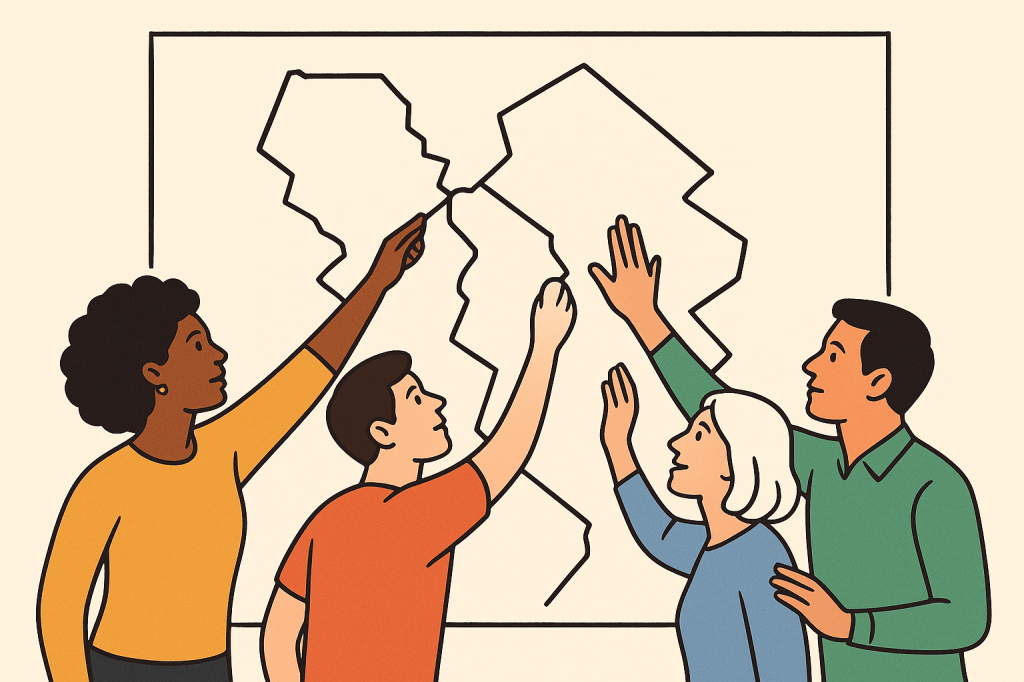

In the face of calculated suppression and partisan manipulation, a new movement is rising—one rooted in courage, compassion, and the unwavering belief that democracy belongs to the people. Across the country, Democratic strategists, voting rights advocates, and everyday citizens are rallying around a powerful truth: gerrymandering can be defeated—and we are the ones who will do it.
From Texas to Ohio, Republican lawmakers have redrawn congressional maps to entrench power, silence dissent, and rig the rules in their favor. But the tide is turning. These maps—engineered to suppress—are beginning to crack under the pressure of public resistance and strategic organizing. In 2026, voters have a chance to flip the script—and redraw the map.
“Gerrymandering relies on predictable voting patterns,” said a strategist with the National Democratic Redistricting Committee. “If voters swing blue in districts designed to be red, the whole map starts to crack.”
In Texas, Republicans pushed for a 30–8 advantage in House seats, targeting five Democratic incumbents. But in their overreach, they may have exposed themselves. Suburban and border districts are now battlegrounds. What was meant to be a fortress could become a fault line.
In Ohio, a 12–3 map was passed under the guise of compromise. Yet several GOP-held districts remain vulnerable. Greg Landsman, Marcy Kaptur, and Emilia Sykes are holding the line—and building momentum. In Georgia, Democrats flipped two statewide Public Service Commission seats in 2025, proving that even deeply gerrymandered states are not beyond reach.
This fight isn’t just about flipping seats—it’s about transforming the system. When voters elect reform-minded leaders to state legislatures and governorships, they unlock the power to end gerrymandering for good: through independent redistricting commissions, nonpartisan map criteria, and transparent public processes. States like Michigan, California, and Colorado have already shown the way. Now it’s time to follow their lead.
“This isn’t just about winning seats,” said one organizer. “It’s about restoring democracy—so voters choose their politicians, not the other way around.”
Gerrymandering is more than a political tactic—it’s a betrayal of public trust. It tells communities they don’t matter. It tells voters their voices are expendable. It locks out the very people democracy was meant to serve. But here’s the truth: Republican gerrymandering can be undone. It is not permanent. It is not destiny. It is a strategy—and strategies can be dismantled.
And they are being dismantled.
In Texas, voters are organizing in the very districts Republicans tried to suppress. In Ohio, they’re defending vulnerable seats and preparing to flip more. In Georgia, they’re proving that statewide wins are possible—even in the face of structural disadvantage. These victories aren’t anomalies—they’re signs of a system being reclaimed.
North Carolina is rising. With Senator Thom Tillis retiring, voters are mobilizing in Charlotte, Raleigh, and beyond. If they win the legislature, they can bring redistricting reform to a state that has long been plagued by partisan maps. Florida and Missouri remain uphill battles—but even there, legal challenges and demographic shifts are opening cracks in the wall.
And then there are the sleeper states: Indiana and Louisiana. In Indiana, overzealous GOP maps may have overreached, leaving suburban districts newly competitive. In Louisiana, litigation under the Voting Rights Act could lead to the creation of new majority-Black districts, restoring power to communities that have long been denied it.
In Alabama, a court-ordered redistricting in 2023 has already led to the creation of a second majority-Black district. That victory can be replicated in Arkansas, Tennessee, and Mississippi—states where Black voters have been cracked, packed, and silenced for generations.
With momentum from victories in 2025 in Virginia, New Jersey, Mississippi, and Georgia, voters are poised to flip North Carolina, Texas, Ohio, Indiana, and Louisiana. If they succeed, they won’t just win elections—they’ll restore the foundation of representative government.
Because this isn’t just a partisan fight. It’s a moral one. Gerrymandering undermines democracy, suppresses voter power, and entrenches minority rule. But it can be dismantled through organizing, voting, and relentless resolve.
This is about dignity. About every voter—rural or urban, Black or white, Democrat or Republican—knowing their voice matters. Gerrymandering steals that dignity. But the people are fighting back. And they are winning.
The fight to end gerrymandering is the fight to restore the promise of American democracy. And that fight is not only necessary—it is winnable.
References
- ABC News – “How Gerrymandering Has Reshaped the Political Map.” Read the full article
- Politico – “Why Democrats Can’t Match Trump’s Gerrymander Push.” Read the full article
- Democracy Docket – “Mapped: Where Redistricting Battles Are Unfolding Nationwide.” Explore the tracker
- Brennan Center for Justice – Redistricting and Voting Rights Reports. Visit the Brennan Center
- Electoral Innovation Lab – The Gerrymandering Project. Explore the project
- Election Law Blog – “Top Maryland Democrat Torpedoes State’s Redistricting Push.” Read the article
- Factually – “What Reforms Are Proposed to End Gerrymandering in Congress?” Read the analysis
- PBS NewsHour – “What’s Next in the National Redistricting Fight After California Approved a New U.S. House Map.” Read the report
 Mentonym Express