


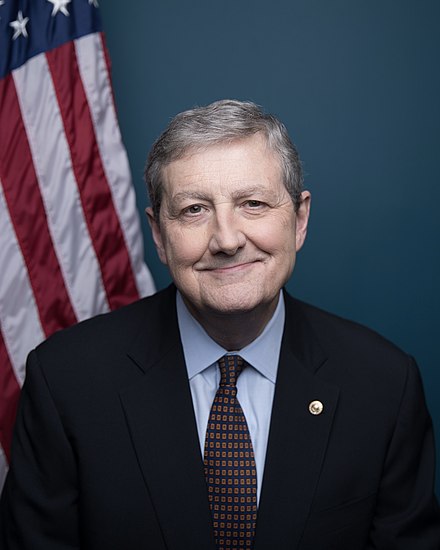

Senator John Kennedy’s recent claim that the Affordable Care Act “failed to deliver” has sparked concern among health policy experts, patient advocates, and families who rely on the law’s protections. While Kennedy’s remarks may resonate with those frustrated by rising costs, critics argue his rhetoric overlooks the ACA’s measurable successes—and the real harm his proposed alternatives could inflict.
Since its passage in 2010, the ACA has helped millions of Americans access care they previously couldn’t afford. The uninsured rate dropped from 16.3% to 8% by 2023, resulting in over 20 million more people gaining coverage. Medicaid expansion in 39 states extended care to 15 million low-income adults, many of whom had been without access to medical care for years. Protections for pre-existing conditions became law, shielding tens of millions from denial or price hikes. Hospitals saw a 70% decrease in uncompensated care costs, saving billions and enabling them to remain open in underserved communities.
“These are not abstract numbers,” said Dr. Lena Morales, a public health policy analyst. “They represent real people—parents, cancer survivors, diabetics—who now have access to screenings, prescriptions, and mental health care. That’s what the ACA delivered.”
Kennedy’s critique centers on rising premiums and deductibles, especially for middle-class families who don’t qualify for subsidies. Average family premiums indeed rose from $13,770 in 2010 to $22,463 in 2023, and employer-plan deductibles climbed from $1,000 to $1,680. But experts say it’s misleading to blame the ACA alone. Healthcare costs were rising long before the law passed, and the ACA introduced mechanisms to slow that growth and expand access.
“The real problem now is Congress letting key subsidies expire,” said economist Jamal Price. “That’s a political choice—not a policy flaw.”
Those subsidies, introduced during the pandemic to make ACA plans more affordable, are set to expire in 2026. Without congressional action, premiums could spike by as much as 78% in states like Illinois, forcing millions to drop coverage. Kennedy has opposed extending these subsidies and instead supports policies like high-risk pools and Medicaid work requirements—approaches that critics say would unravel the ACA’s most effective protections.
“High-risk pools were a disaster for sick people,” said Dr. Aisha Grant, a health policy historian. “They corralled the seriously ill into underfunded plans, charged sky-high premiums, and offered only limited benefits—exactly the outcome the ACA fixed.” Her assessment highlights a stark policy contrast: high-risk pools have historically left the most vulnerable with unaffordable and inadequate coverage. At the same time, the ACA established guaranteed issue and community rating to prevent that outcome.
Here’s where the contradiction becomes impossible to ignore: Kennedy’s campaign has received support from regional healthcare providers such as LHC Group and Ochsner Health System—organizations that benefit directly from ACA-driven Medicaid expansion and reduced uncompensated care. According to OpenSecrets, Kennedy’s top contributors between 2019 and 2024 include LHC Group ($50,006) and Ochsner Health System ($41,145). These providers rely heavily on Medicaid reimbursements and ACA-aligned funding streams to serve low-income and rural populations across Louisiana.
Yet Kennedy has consistently backed proposals that would roll back ACA subsidies, impose Medicaid work requirements, and revive high-risk pools—all of which would shrink coverage and increase financial strain on the very providers supporting him. He has also publicly celebrated federal health grants flowing to Louisiana hospitals—grants often tied to ACA funding mechanisms, including enhanced Medicaid reimbursements and community health block grants. These grants stabilize rural hospitals, expand access to behavioral health services, and reduce emergency room overcrowding.
This isn’t a minor inconsistency—it’s a structural contradiction. Kennedy praises the outcomes while attacking the law that made those outcomes possible. He accepts support from providers who depend on ACA funding, then promotes policies that would cut that funding. He celebrates hospital grants funded by ACA mechanisms, then votes to dismantle those mechanisms.
“Senator Kennedy talks about rising premiums,” said advocacy group HealthFirst in a statement, “but never mentions the ACA’s role in expanding coverage, protecting patients, and stabilizing hospital finances. That’s not oversight—it’s strategy.”
Critics argue that Kennedy’s rhetoric lacks specificity. Which ACA provisions would he repeal—and which would he keep? How would his alternatives protect people with pre-existing conditions? What’s his plan to prevent premium spikes if subsidies expire? Will he guarantee hospitals won’t face a return to pre-ACA levels of uncompensated care? So far, Kennedy has offered soundbites—not solutions.
For families facing chronic illness, for seniors on fixed incomes, and for working parents trying to afford coverage, these questions aren’t political—they’re personal. The ACA didn’t solve every problem, but it gave millions a fighting chance. It offered dignity to those who had been denied. It gave children with asthma, veterans with PTSD, and survivors of cancer a path to care without fear of financial ruin.
This is what’s at stake: not just policy, but people. Not just numbers, but neighbors. The ACA is more than legislation—it’s a lifeline. And when that lifeline is threatened, we must ask: who benefits from the attack, and who pays the price?
Senator Kennedy’s claim that the ACA “failed to deliver” doesn’t hold up to scrutiny. The law expanded coverage, improved access, and reduced systemic costs. The current affordability crisis stems not from the ACA’s design, but from political decisions—like Kennedy’s own—to let key supports expire. As the 2026 subsidy cliff looms, the question isn’t whether the ACA worked. It’s whether lawmakers like Kennedy will protect the progress it has made—or help dismantle it.
For millions of Americans, the stakes couldn’t be higher. And for those who believe health care should be a source of security rather than fear, this is a moment to rise. To speak up. To demand clarity, compassion, and courage from those who claim to represent us. Because when our laws reflect our values, and our leaders act with integrity, we don’t just protect policy—we protect people.
References
- Congressional Budget Office: The Effects of the Affordable Care Act on Health Insurance Coverage
- Centers for Medicare & Medicaid Services: Marketplace Open Enrollment Report
- Kaiser Family Foundation: Key Facts About the Uninsured Population
- Urban Institute: Health Policy Research
- Government Accountability Office: Uncompensated Care and Hospital Financials
- OpenSecrets: Senator John Kennedy Campaign Finance Summary
- Health Affairs: High-Risk Pools and ACA Protections
- Brookings Institution: Health Policy Analysis
- Peterson-KFF: Medicaid Expansion in 2023
 Mentonym Express