


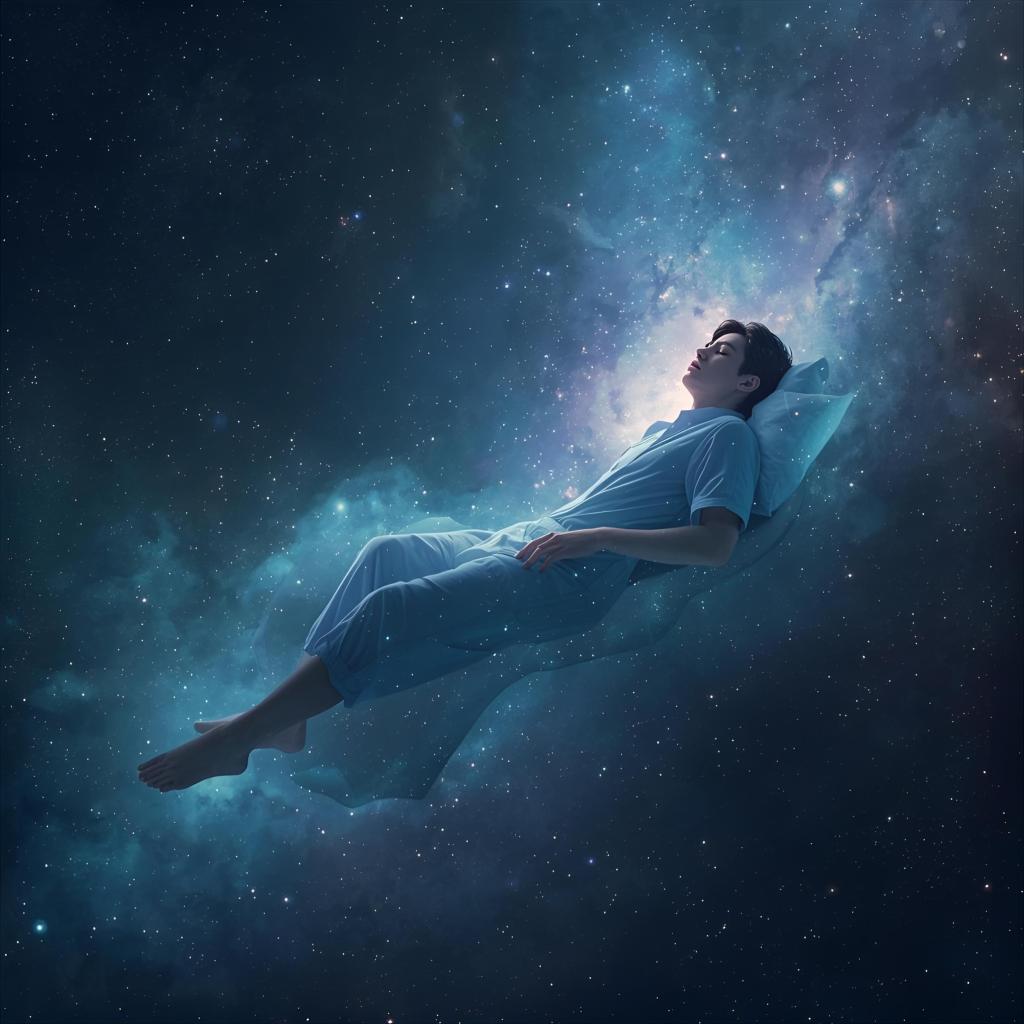
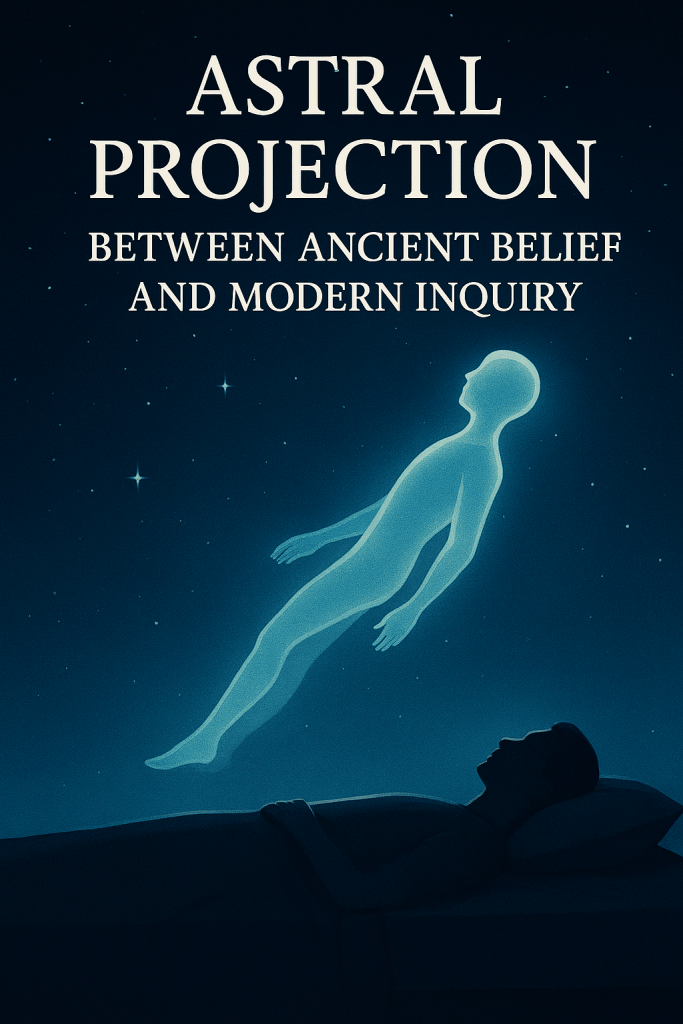
Astral projection, the reported experience of conscious awareness separating from the physical body, continues to captivate people across cultures and generations. For some, it’s a spiritual calling. For others, a psychological mystery. And for many, it’s a deeply personal journey—one that speaks to our most enduring questions about life, death, and the nature of self.
Practitioners who pursue intentional out-of-body experiences (OBEs) often describe sensations that are both startling and profound: a gentle rising, a magnetic pull, or a surge of internal vibration. These moments typically unfold in a state of deep relaxation, sometimes accompanied by sleep paralysis or vivid flashes of light and sound. For those who experience them, these sensations are not just physical—they’re emotional markers of crossing into something unknown.
Standard techniques include the rope method, where one visualizes climbing an invisible rope above the body, and the roll-out method, which involves mentally shifting sideways out of one’s physical form. These practices are more than exercises—they’re rituals of trust, requiring patience, openness, and a willingness to let go. Many practitioners pair them with meditation, breathwork, or binaural audio designed to help the mind enter a receptive state. The goal isn’t escape—it’s connection.
What makes these practices so accessible is their simplicity. No expensive tools. No dogma. Just quiet space, intention, and care. Beginners often cherish even brief or symbolic experiences, seeing them as steps toward deeper awareness. And over time, many report longer journeys, greater clarity, and a sense of navigating unseen landscapes with purpose. Whether interpreted as metaphysical travel or lucid dreaming, the emotional impact is real—and often transformative.
Throughout history, cultures have developed their own language to describe this phenomenon. In Ancient Egypt, the Ka was a vital essence that could travel beyond death. In Indian philosophy, the subtle body navigates realms of thought and energy. Tibetan dream yoga teaches lucidity not for escape, but for insight and the cultivation of compassion. Western esoteric traditions mapped astral planes and developed symbolic systems for spiritual ascent. These frameworks don’t just explain astral projection—they dignify it, giving people a way to understand what they feel.
Today’s practitioners inherit these traditions, often blending them with modern psychology and neuroscience. Whether one speaks of chakras or brainwaves, the underlying message is the same: consciousness is layered, mobile, and deeply personal. These cultural models shape how people interpret their experiences, offering comfort in knowing that others have walked similar paths.
Scientific inquiry approaches OBEs with caution but curiosity. Neurologists link them to REM sleep, lucid dreaming, and disruptions in the temporoparietal junction—a brain region involved in body awareness and perception. Electrical stimulation of this area can produce sensations of floating or viewing oneself from above, suggesting that OBEs may arise from misaligned sensory signals. Psychologists note correlations with dissociation, trauma, and fantasy proneness, framing OBEs as coping mechanisms or expressions of inner conflict.
Yet even within science, there’s recognition that these experiences matter. A 2025 study in Frontiers in Psychology found that most participants described their OBEs as more vivid than waking life. Only one attributed the experience to physiology; the rest attributed it to universal consciousness, other dimensions, or spiritual insight. These aren’t just data points—they’re stories of meaning, resilience, and wonder.
Researchers face challenges in studying OBEs: small samples, expectation bias, and the difficulty of testing subjective states. Attempts to verify OBEs through hidden symbols or remote viewing have yielded inconclusive results. However, many scientists agree that the experiences themselves—regardless of their origin—offer valuable insights into how we construct reality and identity.
Community narratives form the heart of astral projection. People share their stories in forums, books, and quiet conversations, revealing patterns that transcend geography and belief. Floating, buzzing, and the silver cord are common motifs. Some describe cities of light, encounters with guides, or journeys across time. Others speak of partial projections or non-visual sensations—experiences felt more than seen.
These accounts are shaped by culture, expectation, and emotion. What one believes often influences what one perceives. But beneath the variation lies a shared truth: the experience feels real. It feels important. And it often leaves people changed.
Criticism and Limits
Skeptics emphasize the lack of reproducible, objective evidence for literal travel beyond the body. Despite decades of anecdotal reports and experimental attempts, no study has conclusively demonstrated that individuals can perceive or interact with physical reality while in an out-of-body state. Controlled trials—such as placing hidden symbols in hospital rooms or asking participants to describe remote targets—have yielded mixed or inconclusive results, often hindered by small sample sizes, inconsistent protocols, and difficulties in verifying claims without contamination from prior knowledge or suggestion.
Alternative explanations abound. Lucid dreaming, hallucination, sleep paralysis, and temporal‑parietal neural disruption account for many phenomenological features without invoking a separable consciousness. For example, the sensation of floating or seeing one’s body from above can be recreated through electrical stimulation of the temporoparietal junction, a brain region involved in spatial awareness and self-location. Similarly, sleep paralysis can produce vivid, immersive experiences that feel real but are neurologically rooted in REM-state dissociation.
Critics also point to anecdotal bias—the tendency for dramatic or emotionally charged experiences to be shared more widely than mundane or failed attempts. This skews public perception and makes it difficult to assess the actual prevalence or nature of OBEs. Additionally, confirmation bias plays a role: individuals who believe in astral projection may interpret ambiguous sensations as evidence of success, thereby reinforcing their expectations without objective validation.
Methodological challenges persist. Designing falsifiable tests for subjective experiences is inherently tricky. Researchers must account for placebo effects, expectation priming, and the influence of cultural narratives on perception and interpretation. Double-blind protocols are rare, and replication across labs is limited. As a result, astral projection remains scientifically unconfirmed as a literal phenomenon.
Yet at the same time, critics and proponents agree on a pragmatic point: the phenomenon is real as an inward experience with measurable psychological and cultural effects, even if its metaphysical status remains contested. OBEs can produce lasting shifts in worldview, reduce fear of death, and foster a sense of connection or purpose. Some therapists explore OBE-like imagery in trauma recovery, while artists and writers draw on projection motifs to explore identity and transformation. In this light, astral projection may be best understood not as a testable claim about external reality, but as a rich and meaningful altered state—one that invites exploration of consciousness, perception, and the boundaries of self.
Why It Still Matters
Astral projection remains a topic of public interest because it addresses perennial human questions about consciousness, mortality, and agency. It offers an experiential frame for people seeking direct insight, and it fuels communities that exchange techniques, narratives, and interpretations. For writers and researchers, the phenomenon is fertile ground where phenomenology, cultural history, and neuroscience intersect.
Its appeal lies not only in the possibility of metaphysical travel but in the deeply personal nature of the experience. For many, OBEs serve as a form of existential inquiry—an unmediated confrontation with the boundaries of self and the mystery of awareness. Whether interpreted as spiritual, psychological, or symbolic, the experience often leaves a lasting impression that reshapes how individuals perceive life, death, and their identity.
In a cultural moment increasingly shaped by materialism and digital immersion, astral projection offers a countercurrent: a practice rooted in inner exploration rather than external consumption. It invites people to cultivate stillness, attention, and introspection—qualities often marginalized in fast-paced, outcome-driven societies. For some, it becomes a form of contemplative practice; for others, a creative wellspring or therapeutic metaphor.
The phenomenon also continues to inspire art, literature, and speculative science. From ancient epics to modern science fiction, the motif of leaving the body to explore other realms has served as a narrative device for transformation, revelation, and critique. In contemporary media, astral projection appears in various forms, from graphic novels to video games, often serving as a metaphor for transcendence, trauma, or dual identity.
For researchers, OBEs offer a rare opportunity to study consciousness from the inside out. They challenge conventional models of perception and embodiment, and they raise testable questions about how the brain constructs reality. Even when stripped of metaphysical claims, the consistency of OBE reports across cultures and eras suggests a stable psychological architecture that warrants further investigation.
Ultimately, astral projection matters because it refuses to be easily categorized. It is at once ancient and modern, spiritual and neurological, subjective and cross-cultural. It invites us to ask not only “What is real?” but “What is possible?”—and in doing so, it keeps the conversation about consciousness open, imaginative, and deeply human.
References
- Moix, J., Nieto, I., & Yue De la Rua, A. (2025). Out-of-body experiences: Interpretations through the eyes of those who live them. Frontiers in Psychology.
— A qualitative study exploring how individuals interpret their OBEs, with most describing them as more vivid than waking reality. - Weiler, M. et al. (2024). Out-of-body research could lead to new ways to promote social harmony. ScienceDaily.
— Investigates how OBEs may foster empathy and prosocial behavior through ego dissolution and interconnectedness. - Dolan, E. (2025). Out-of-body experiences linked to higher rates of mental health symptoms and trauma. PsyPost.
— Explores correlations between OBEs and trauma history, challenging stigma and calling for nuanced clinical understanding. - Shaw, J., Gandy, S., & Stumbrys, T. (2023). Transformative effects of spontaneous out-of-body experiences in healthy individuals. APA PsycNet.
— An interpretative phenomenological analysis showing OBEs can reduce fear of death and catalyze psychological growth. - Blanke, O. et al. (2004). Out-of-body experience and autoscopy of neurological origin. Brain Journal.
— A foundational neurological study linking OBEs to disruptions in the temporoparietal junction and vestibular processing. - Zingrone, N., Alvarado, C., & Cardeña, E. (2010). Out-of-body experiences and physical body activity and posture. Journal of Nervous and Mental Disease (PDF).
— Suggests OBEs are more likely during low physical activity and supine posture, supporting altered-state triggers.
 Mentonym Express