


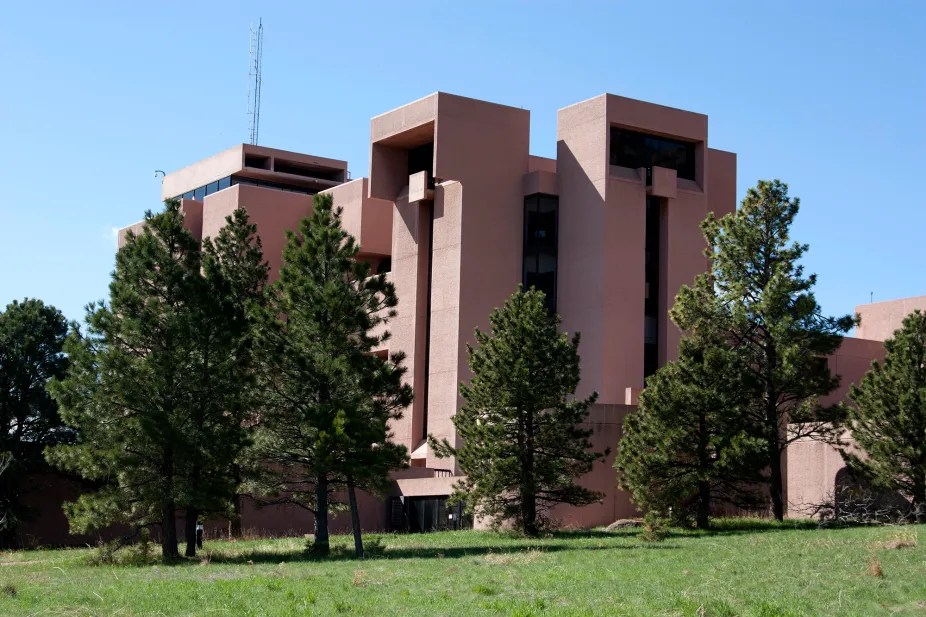

The Trump administration’s decision to dismantle the National Center for Atmospheric Research (NCAR) has sparked a political firestorm on Capitol Hill and raised alarm among scientists who warn the move is part of a sweeping ideological effort to weaken federal climate research. The announcement, delivered by Office of Management and Budget Director Russ Vought, would break apart the Boulder‑based research center, shutter its Mesa Laboratory, and relocate or eliminate several of its programs. Vought described NCAR as “one of the largest sources of climate alarmism in the country,” a characterization that drew immediate pushback from researchers and lawmakers. The timing of the decision derailed a nearly finalized bipartisan Senate funding agreement, with Colorado Sens. Michael Bennet and John Hickenlooper blocking the package until Congress intervenes. One Senate aide described the NCAR announcement as “a stick of dynamite” thrown into the final stages of negotiations. Scientists warn that dismantling NCAR — a global leader in atmospheric modeling, severe‑weather forecasting, and climate research — would undermine national preparedness for hurricanes, wildfires, and other natural disasters. “This is the destruction of knowledge,” one climate scientist said, noting that NCAR’s supercomputing and modeling capabilities underpin forecasting systems used across federal agencies. For families living in disaster‑prone regions, the loss of this capacity could mean less warning, less protection, and greater vulnerability.
Analysts argue the administration views climate research as politically threatening because its findings often point to the need for stronger regulations, cleaner energy, and long‑term planning — all of which run counter to the White House’s emphasis on fossil fuel expansion and deregulation. In this framing, science itself becomes a political adversary rather than a neutral source of evidence. Officials have repeatedly portrayed climate research as partisan “alarmism,” suggesting that institutions like NCAR are advancing an agenda rather than providing data. Yet critics say this rhetoric reveals a deeper insecurity: the administration fears that scientific evidence could undermine its policy priorities by exposing the real costs of inaction. Rising sea levels, intensifying hurricanes, and worsening droughts are not abstract warnings — they are measurable realities that demand government response. By casting climate science as a political enemy, the administration has created a chilling effect across federal agencies. Researchers report pressure to downplay findings, delays in publishing climate‑related studies, and even restrictions on the use of terms like “climate change” in official documents. Analysts warn that this politicization erodes trust in government institutions and leaves communities less prepared for disasters. “This is why climate research is seen as threatening,” one policy expert explained. “It forces leaders to confront uncomfortable truths. Ignoring the data doesn’t make the storms go away — it just makes people more vulnerable when they hit.”
Researchers and policy experts say these actions reflect an ideological campaign rather than a scientific dispute. Climate research often supports regulations and policies that conflict with the administration’s priorities, including fossil fuel expansion and deregulation. As a result, scientific institutions have increasingly been framed as partisan actors, with officials labeling NCAR a “stronghold for left‑wing climate lunacy” and targeting what they call “Green New Scam research.” Critics argue that this framing exposes a deeper problem: both Russ Vought and President Trump have demonstrated a striking naivety about NCAR’s actual role. Far from being a political institution, NCAR is a world‑class research center that provides the atmospheric models used by federal agencies, state governments, and farmers to forecast hurricanes, track wildfire behavior, and plan for droughts. By dismissing it as “alarmist,” the administration reveals not only hostility toward climate science but also a lack of awareness of how essential NCAR’s work is to public safety and national resilience. “This isn’t about ideology,” one scientist said. “It’s about whether leaders understand the basic functions of the institutions they’re dismantling. NCAR doesn’t do politics — it does forecasting. And without it, communities across the country will be flying blind.” Treating NCAR as a partisan actor, rather than a scientific lifeline, underscores how disconnected the administration is from the realities of disaster preparedness and food security. Yet it also highlights the courage of those who continue to defend science as a public good.
The NCAR dismantling is not an isolated action. Analysts say it fits into a broader pattern in which the Trump administration has repeatedly targeted scientific programs whose findings conflict with its political or economic priorities. Over the past year, multiple federal research domains — from climate modeling to clean‑energy development — have faced cuts, relocations, or new layers of political oversight. Climate and environmental science programs have been among the most heavily affected. Agencies including NOAA, EPA, and the Department of Energy have seen proposed reductions to climate‑monitoring initiatives, restrictions on terminology in official documents, and efforts to relocate or reorganize research offices. Experts say these moves weaken the government’s ability to track pollution, model extreme weather, and assess long‑term climate risks — leaving families, farmers, and first responders with less information to protect themselves. Clean‑energy and technology research has also come under pressure. The administration has repeatedly proposed eliminating or scaling back programs that support renewable‑energy development, including ARPA‑E, the federal agency responsible for high‑risk, high‑reward energy innovation. Analysts note that these cuts align with the administration’s emphasis on fossil fuel expansion and deregulation, but they also stall progress toward cleaner, more affordable energy that communities depend on. The impact extends beyond climate and energy. Public‑health researchers have reported canceled grants and new political review requirements for scientific studies, while agricultural scientists have faced delayed publication of climate‑related findings and the relocation of key research offices. Earth‑monitoring satellite programs at NASA and NOAA have also been targeted for cuts or restructuring, raising concerns about the nation’s ability to track hurricanes, droughts, and wildfire conditions. Researchers say the cumulative effect is a destabilized scientific ecosystem in which long‑term projects face uncertainty and scientific independence is increasingly constrained. “People no longer know the rules of the game,” one federal scientist said. “The ground keeps shifting.” For those who depend on this research — from farmers to families in disaster zones — the uncertainty is deeply unsettling. Yet the persistence of scientists and lawmakers fighting back shows that knowledge itself can be defended.
Colorado lawmakers are preparing an aggressive response to the administration’s plan, signaling that they will use every legislative and procedural tool available to prevent the dismantling of NCAR. Sens. Bennet and Hickenlooper have already halted progress on the broader Senate funding package, but aides say that move is only the opening step in a larger strategy. According to congressional staff familiar with the discussions, the senators are exploring amendments to upcoming appropriations bills that would explicitly bar the administration from reallocating NCAR’s programs or closing its facilities. They are also considering language requiring federal agencies to justify any major restructuring of scientific institutions through independent review panels — a measure designed to slow or block politically motivated changes. Committee chairs from both parties have been briefed on the potential fallout of the NCAR decision, and several lawmakers have expressed concern that dismantling the center could undermine national safety. NCAR’s models are used by federal agencies to forecast hurricanes, track wildfire behavior, and assess long‑term climate risks — capabilities lawmakers say are essential for emergency planning and disaster response. In addition to legislative measures, Colorado’s delegation is weighing procedural tactics that could delay or complicate the administration’s efforts. These include holds on key nominations, objections to unanimous‑consent agreements, and targeted oversight hearings aimed at scrutinizing the rationale behind the NCAR decision. One senior aide described the approach as “a full‑court press to protect the country’s scientific infrastructure.” State officials in Colorado have also begun coordinating with federal lawmakers, warning that the dismantling of NCAR would have severe economic and scientific consequences for the region. The center employs hundreds of researchers and supports a network of universities and laboratories across the state. Local leaders argue that the administration’s move threatens not only national forecasting capacity but also Colorado’s position as a hub for atmospheric and climate research. Lawmakers say the stakes extend far beyond state borders. “This isn’t just a Colorado issue,” one senator said. “This is about whether the United States will continue to invest in the science that keeps people safe.”
While the Senate has taken the lead in responding to the NCAR announcement, lawmakers in the House are also preparing to intervene. Members of Colorado’s delegation have begun coordinating with House appropriators and committee chairs to explore legislative options that could block or delay the administration’s plan. House leaders are considering several approaches. One option is to include protective language in the upcoming appropriations bills that would prohibit the use of federal funds to dismantle or relocate NCAR programs. Another possibility is to require the administration to submit a detailed impact assessment to Congress before any restructuring can proceed — a process that could take months and effectively stall the effort. Several House committees, including Science, Space, and Technology, are weighing oversight hearings to scrutinize the administration’s rationale and examine the potential consequences for national forecasting capacity. Lawmakers say these hearings could compel agency officials to testify under oath about the decision‑making process behind the NCAR plan. In addition to legislative and oversight tools, House members are discussing the possibility of bipartisan letters demanding a pause on the dismantling until Congress completes a full review. Such letters, while not legally binding, can signal broad political resistance and complicate the administration’s timeline. Some lawmakers are also exploring the use of the Congressional Review Act (CRA) if the administration formalizes the NCAR restructuring through rulemaking. While the CRA is typically used to overturn regulations, analysts say it could become relevant if the administration codifies its plan in a way that triggers congressional review. Taken together, these actions suggest that Congress is preparing a multi‑layered response that spans both chambers. Lawmakers say the goal is not only to protect NCAR but also to establish guardrails that prevent future administrations from unilaterally dismantling major scientific institutions.
References
- ABC News – Trump administration moves to dismantle prominent US weather and climate research center
- NBC News – Trump administration plans to break up largest federal climate research center
- Mother Jones / Guardian – Trump Administration to Dismantle Key Climate Research Center in Colorado
- Bloomberg Green – US Plans to Dismantle Climate Science ‘Cornerstone’
- Center for American Progress – Climate Deniers of the 119th Congress and the Second Trump Administration
- Boulder Reporting Lab – Trump administration signals intent to dismantle NCAR in Boulder
- Grantham Research Institute (LSE) – Inside Trump’s campaign to censor climate science
- Yale Climate Connections – Trump’s climate research cuts are unpopular, even with Republicans
 Mentonym Express