


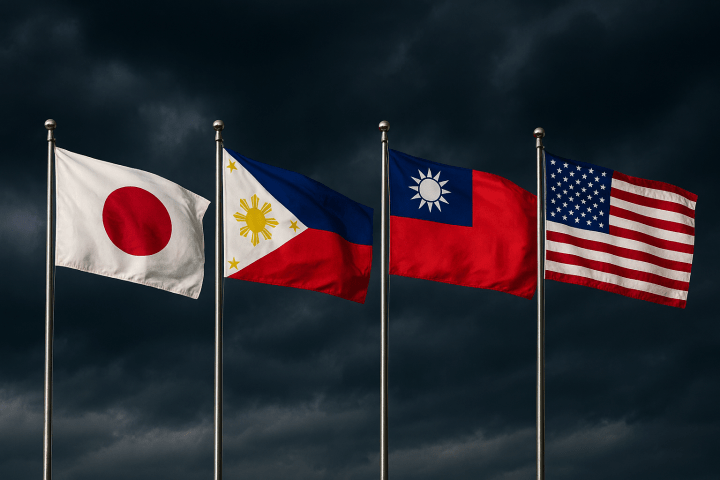
Tokyo, December 21, 2025 — Japan’s growing determination to defend Taiwan is intensifying tensions with China and raising alarms about the broader consequences of Beijing’s increasingly aggressive posture for global stability. For many across Asia and beyond, this moment has become more than a geopolitical dispute — it is a call to action, a reminder that when nations stand together, they can transform vulnerability into strength and blunt the force of intimidation.
Prime Minister Sanae Takaichi declared last month that a Chinese attack on Taiwan could represent an “existential crisis” for Japan, potentially justifying military action under collective self-defense laws. The statement drew immediate protests from Beijing, which accused Japan of “reviving militarism” and demanded a retraction.
China’s retaliation was swift and punishing. Travel advisories discouraged Chinese citizens from visiting Japan, cultural exchanges were curtailed, and seafood imports were suspended. Tourism slowed sharply, businesses faced mounting strain, and cherished cultural events — from exhibitions to concerts — were canceled. These measures underscored Beijing’s willingness to wield economic and cultural influence as weapons, punishing ordinary people while signaling its displeasure with Tokyo.
Taiwan’s central role in this confrontation highlights the danger. The island is a critical hub for global semiconductor production and sits astride vital shipping lanes. Analysts warn that a conflict in the Taiwan Strait would not only destabilize East Asia but also send shockwaves through the global economy, crippling industries from automobiles to smartphones. For Japan, just 100 kilometers from Taiwan’s Yonaguni Island, the threat is immediate and potentially catastrophic.
In response, Tokyo has accelerated deployments of cruise missiles and surveillance systems on its southwestern islands, expanded joint military exercises with the United States, and raised defense spending to record levels. “Japan’s defense posture is not just about its own survival — it’s about preserving stability in the Indo-Pacific,” said one regional analyst.
But Japan is not alone in facing Beijing’s pressure. The Philippines has also endured escalating harassment in the South China Sea. On December 12, Chinese Coast Guard vessels fired water cannons at nearly two dozen Filipino fishing boats near Sabina Shoal, injuring three fishermen and damaging two vessels. Chinese ships reportedly cut anchor lines, blocked Philippine Coast Guard vessels from reaching the injured, and carried out hazardous nighttime maneuvers. Manila denounced the attacks as “dangerous” and “inhumane,” filing a formal diplomatic protest and deploying more assets to protect its fishermen.
China, meanwhile, accused the Philippines of “provoking trouble” and claimed its coast guard acted lawfully — even alleging Filipino fishermen threatened officers with knives, a claim Manila dismissed as disinformation. The United States, Canada, and other allies condemned Beijing’s actions, stressing that they endangered lives and violated international law. Escoda Shoal lies within the Philippines’ exclusive economic zone, but China continues to assert sweeping claims across the South China Sea, ignoring the 2016 arbitral tribunal ruling that invalidated its position.
The risks extend far beyond Asia. A Taiwan conflict could cripple global supply chains, disrupt maritime trade routes, and force nations into stark choices, deepening divides between democratic and authoritarian blocs. China’s harassment of Filipino fishermen underscores its broader strategy: testing the resolve of neighbors, undermining international law, and expanding control over critical waters through intimidation.
Yet amid the tension, a new theme is emerging: unity. Japan, the Philippines, Taiwan, and other nations are increasingly aware that standing alone leaves them vulnerable, but standing together transforms vulnerability into strength. Economically, Tokyo is diversifying supply chains to reduce reliance on China, while Manila is rallying international support to uphold freedom of navigation. These efforts reflect a shared recognition that peace requires resilience, cooperation, and solidarity.
The confrontation over Taiwan and the South China Sea is increasingly viewed as a defining test of the century. “If China moves on Taiwan, the ripple effects will be global,” said another analyst. “The response of Asia’s democracies will determine whether the Indo-Pacific remains stable or slides into conflict.”
As tensions mount, the world watches with growing concern. For citizens in Japan, the Philippines, Taiwan, and beyond, the stakes are not abstract geopolitics but the future of families, livelihoods, and the fragile peace that binds nations together. The choices made in Tokyo, Manila, Beijing, and Washington will shape whether Asia becomes the epicenter of regional clashes — or the frontline of a broader struggle against China’s expanding threat to global order.
And for ordinary people, the message is clear: unity is strength. When nations around China stand together, they can blunt Beijing’s bullying and prove that intimidation cannot break the will of free societies. The defense of Taiwan, the resilience of Japan, and the courage of Filipino fishermen represent more than strategy — they embody the determination of nations and peoples everywhere to resist aggression and preserve peace for generations to come.
Sources (clickable):
- Bloomberg: Japan Builds Up ‘Missile Archipelago’ Near Taiwan to Counter China
- Newsweek: China Escalates Dispute with Japan
- The Conversation: Why tensions between China and Japan are unlikely to be resolved soon
- Bloomberg: Chinese Tourist Arrivals to Japan Slow as Tensions Simmer
- Times Now: China, Japan Fighter Jets Go Head to Head as Taiwan Tensions Boil Over
- Politico: Japan warns of China’s military moves as biggest strategic challenge
- South China Morning Post: China’s military build-up could ‘seriously’ affect Japan’s security
- TIME: How the China-Japan Rift Could Cost Both Countries
- NBC News: Philippines says fishermen hurt, boats damaged by China in South China Sea
- Inquirer: PH files new diplomatic protest vs China for Dec. 12 attack on fishermen
- GMA News: PH calls out China’s dangerous, inhumane acts vs Pinoy fishers
- Channel News Asia: Philippines denounces China’s ‘dangerous’ and ‘inhumane’ actions

Vintage Library Mouse Pad
Dusty books, glowing lamp, and timeless study vibes — perfect for readers, writers, and vintage decor lovers. Smooth surface and non‑slip backing make it ideal for work, gaming, or everyday browsing. Bring the quiet magic of libraries to your desk. $7.50
 Mentonym Express