


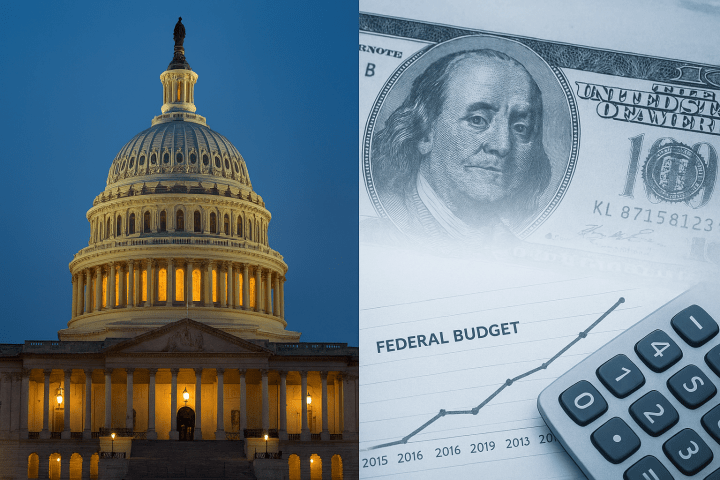
As the 2026 election cycle accelerates, a core group of high‑profile House Republicans is campaigning on a unified fiscal message centered on “putting America first,” balancing the federal budget, and stopping what they describe as “reckless spending.” Yet as these lawmakers repeat calls for discipline and restraint, their voting records tell a different story — one that helped create the very deficit pressures they now condemn. The contrast between their words and actions has become a defining question of this election year, and a reminder that voters have the power to demand consistency, honesty, and courage from those who seek to lead.
The rhetoric mirrors a recent post by Sen. Rick Scott, who urged lawmakers to prioritize fiscal restraint and protect the American Dream. While Scott himself is not on the ballot this year, several of the most prominent House Republicans echoing his language are. Their campaigns will test whether voters accept the renewed calls for budget discipline or challenge the role these lawmakers played in shaping today’s fiscal landscape. At a moment when the country is searching for steadiness and integrity, this election offers an opportunity to insist that leaders match their promises with their actions.
Speaker Mike Johnson, Budget Committee Chair Jodey Arrington, and influential members such as Lisa McClain, Byron Donalds, and Jim Jordan have all promoted nearly identical themes in speeches, interviews, and budget communications. Their statements emphasize restoring fiscal discipline, reducing federal spending, and safeguarding future generations. The alignment is tied to the House GOP’s “America First” budget framework, which calls for deep spending cuts and a balanced budget. The resolution passed with 217 Republican votes and has become a central talking point for the party’s 2026 messaging strategy.
A defining contradiction sits at the heart of this message. The same lawmakers now warning about deficits helped pass the tax legislation championed by President Donald Trump — the package he repeatedly called the “big beautiful bill.” That legislation significantly reduced federal revenue. Independent budget analysts projected at the time that it would add trillions to the national debt unless paired with major spending cuts. Those cuts never materialized. Budget experts note that if the tax package had not been enacted, the current deficit would not be nearly as severe. This is not a matter of political spin — it is a matter of arithmetic, and a reminder that fiscal responsibility begins with responsible choices.
The tax package also delivered substantial financial benefits to high‑income households, with analysts reporting that the largest gains flowed to individuals earning well above the national median. While middle‑income families saw modest, temporary reductions, the wealthiest Americans received long‑term tax advantages worth millions. This distributional impact has become a central point of criticism, especially as the same lawmakers now call for cuts to federal programs in the name of fiscal responsibility. The contrast raises a simple yet powerful question: Who was government meant to serve—and who should it serve now?
At the same time, these lawmakers supported budget proposals that included cuts to both Medicare and the Affordable Care Act (Obamacare) — reductions that would have shifted costs onto seniors, working families, and state health systems. While promoting themselves as defenders of the American Dream, they proposed cutting federal support for programs millions of Americans rely on. The combination of revenue‑reducing tax cuts, benefits for the wealthy, and program cuts for ordinary Americans has become a central point of contention, highlighting the gap between their messaging and the real‑world impact of their policy choices. It also underscores a broader truth: budgets are moral documents that reveal priorities more clearly than any speech.
Fact‑Based Analysis: How Taxing the Wealthy Would Have Strengthened the Federal Budget. Nonpartisan budget analysts have consistently found that higher tax rates on the wealthiest Americans generate substantial federal revenue, while tax cuts for top earners significantly reduce it. Prior to the passage of President Donald Trump’s “big beautiful bill,” the Congressional Budget Office and multiple independent economic institutes reported that maintaining or increasing tax rates on high‑income households would have produced hundreds of billions of dollars in additional federal revenue over the following decade.
After the bill passed, federal revenue fell sharply. Analyses from the CBO, the Joint Committee on Taxation, and major economic research organizations concluded that the tax cuts for high‑income households and corporations were a primary driver of that decline. These findings show that if Congress had chosen to raise taxes on the wealthiest Americans — or simply kept pre‑existing tax rates in place — the federal deficit would be significantly smaller today.
Multiple fiscal studies confirm that reversing even a portion of the tax cuts for top earners would have generated enough revenue to offset large parts of the current shortfalls now being used to justify cuts to Medicare, the Affordable Care Act, and other essential programs. In short, the budget strain lawmakers now warn about was not an unavoidable crisis. It was the direct result of a policy choice that reduced revenue at the top while increasing long‑term deficits. And that fact offers a hopeful lesson: different choices can lead to better outcomes.
Speaker Mike Johnson has become one of the loudest voices demanding a balanced budget and an end to “reckless spending.” Yet he voted for the GOP budget framework that includes trillions in tax reductions projected to increase the deficit, along with proposals to cut Medicare and roll back ACA coverage expansions. His current warnings about fiscal danger stand in direct contrast to his earlier votes that helped create the shortfall.
Rep. Jodey Arrington, as Chair of the House Budget Committee, has positioned himself as a champion of fiscal responsibility. But he helped craft and promote the “America First” budget resolution that expands the deficit through large tax cuts without offsets, while also proposing cuts to Medicare and the Affordable Care Act. His calls for “right‑sizing government” now collide with a record that widened the fiscal gap and targeted major health programs for reductions.
Rep. Lisa McClain frequently speaks about protecting future generations from debt. Yet she voted for the GOP budget resolution that increases long‑term deficits, supported earlier tax packages that reduced federal revenue, and backed proposals to cut Medicare and ACA subsidies. Her messaging focuses on discipline, but her voting history reflects support for measures that contributed to the debt burden she now cites as a national threat.
Rep. Byron Donalds often criticizes federal spending and calls for a balanced budget. But he supported tax legislation and budget frameworks that expand the deficit, along with proposals to reduce Medicare spending and scale back ACA coverage. His rhetoric frames the national debt as a crisis, yet his legislative actions helped fuel it while targeting health programs relied on by millions.
Rep. Jim Jordan regularly denounces federal spending and positions himself as a defender of fiscal restraint. However, he supported the tax overhaul that significantly reduced federal revenue and contributed to long‑term deficits. He also backed budget proposals that included cuts to Medicare and the Affordable Care Act. His voting record stands in stark contrast to his current warnings about Washington’s fiscal irresponsibility.
Among the Republicans using the coordinated fiscal messaging, the following high‑profile House members are confirmed to be running for re‑election this year: Speaker Mike Johnson of Louisiana, Rep. Jodey Arrington of Texas, Rep. Lisa McClain of Michigan, Rep. Byron Donalds of Florida, and Rep. Jim Jordan of Ohio. All five hold influential positions within the party and have been central voices in promoting the “America First” budget narrative. By contrast, several other prominent Republicans using similar messaging — including President Donald Trump, Sen. Rick Scott, and Sen. Ted Cruz — are not on the ballot in 2026.
As these lawmakers campaign on promises of fiscal discipline, their past support for deficit‑expanding tax legislation — combined with the fact that the tax cuts delivered millions in benefits to the wealthy while their budgets proposed cuts to Medicare and the Affordable Care Act — is expected to remain a central point of contention. The 2026 elections will test whether voters accept the renewed calls for budget restraint or challenge the gap between the party’s messaging and the fiscal consequences of the “big beautiful bill,” the health‑care cuts they advanced, and the lost opportunity to stabilize the budget by taxing the rich instead of rewarding them.
And yet, embedded in this moment is a source of inspiration: the power to choose differently. Elections are not just verdicts on the past — they are invitations to build a future grounded in honesty, fairness, and responsibility. When contradictions are exposed, accountability becomes possible. And when accountability becomes possible, so does progress.
References
CBO – Budget and Economic Outlook: (cbo.gov in Bing)
CRFB – TCJA Revenue Loss Analysis: (crfb.org in Bing)
CBO – Post‑TCJA Projections: (cbo.gov in Bing)
JCT – Distributional Tables: (jct.gov in Bing)
CBO – GOP Budget Resolution Analysis: (cbo.gov in Bing)
CBO – High‑Income Tax Rate Revenue Projections: (cbo.gov in Bing)
 Mentonym Express