

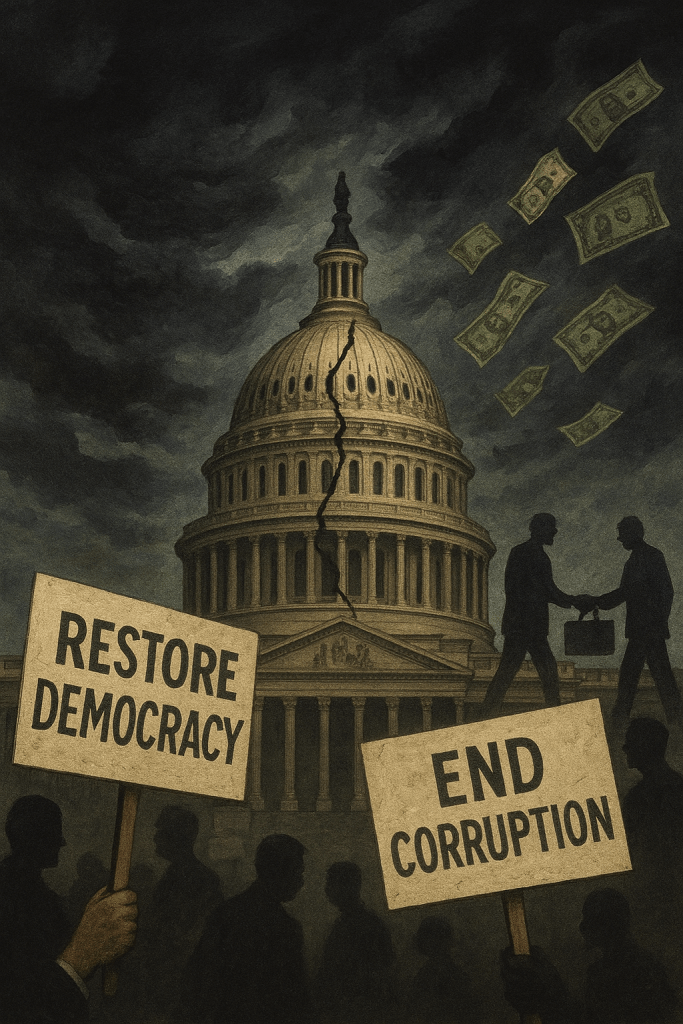
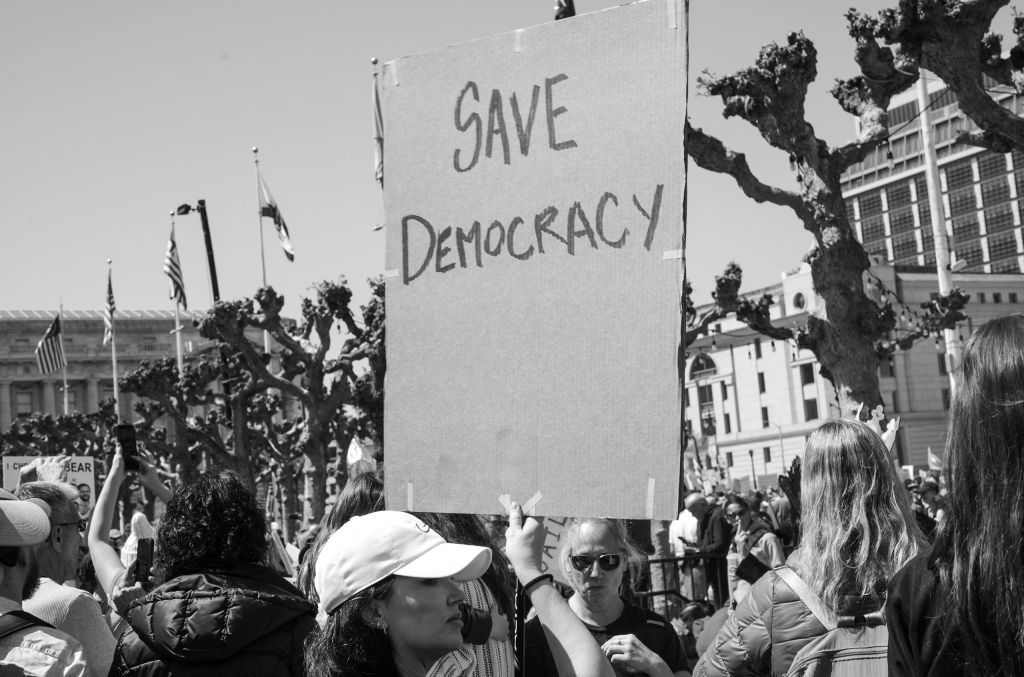
Across the country, Americans are witnessing the slow unraveling of democratic norms. What once sparked bipartisan outrage is now routine. What used to be scandal is now strategy. Since Donald Trump’s return to power, corruption hasn’t just crept into government—it’s been codified. This article connects the dots: from federal profiteering to state-level abuse, from judicial retaliation to congressional impunity. The damage is not theoretical. It’s systemic. And it’s accelerating.
But corruption is not invincible. It thrives in silence, but it collapses under scrutiny. Every time we expose it, challenge it, and demand better, we move closer to restoring the integrity this country deserves.
Trump’s second term has transformed public office into a personal business empire. In just six months, he visited his own properties 99 times—a 37% increase from his first term. These weren’t ceremonial stops. They were transactional. Foreign delegations from at least 10 countries held events at Trump-owned venues, blurring the line between diplomacy and self-dealing. His crypto venture, USD1—launched with backing from Binance and Emirati investors—reportedly generated tens of millions for Trump-linked entities. The pardon of Binance founder Changpeng Zhao, following a $2 billion MGX transaction involving USD1, wasn’t just suspicious—it was a signal: under this administration, justice is negotiable. Pardons for Rudy Giuliani, Glen Casada, and Zhao weren’t about mercy. They were about loyalty, silence, and control.
This isn’t just about Trump. It’s about a Republican Party that has embraced corruption as a governing model. At the federal level, Trump and his Middle East envoy, Steve Witkoff, allegedly profited from foreign cryptocurrency and real estate deals, including a luxury jet gifted by Qatar and a $230 million DOJ payout approved by Trump appointees. The administration reportedly negotiated access to U.S. military-grade microchips for the UAE—despite its ties to China’s military—in exchange for concessions in cryptocurrency and real estate. National security was traded for personal gain. Trump also allegedly directed Attorney General Pam Bondi to indict New York AG Letitia James without evidence and fabricated a mortgage-fraud scandal against Federal Reserve Governor Lisa Cook to replace her with a loyalist. These aren’t isolated abuses. They are coordinated attacks on the rule of law, designed to consolidate power and punish dissent.
In Congress, the rot runs deep. Reps. Andy Ogles (TN), Mike Kelly (PA), and Cory Mills (FL) each face serious ethical and legal scrutiny. Ogles, endorsed by Trump, is under federal investigation for campaign finance fraud and undisclosed lobbying ties. Kelly, rebuked by the House Ethics Committee, shared non-public financial data with his wife, who then bought stock in a steel firm. Mills, a self-described “MAGA warrior,” faces a restraining order for alleged stalking and threats to release explicit material. These men aren’t just compromised—they’re protected. Their loyalty to Trump shields them from consequences. In today’s GOP, corruption isn’t punished—it’s rewarded with airtime, endorsements, and committee seats.
Senators Markwayne Mullin (OK) and John Boozman (AR) bought defense stocks while overseeing military contracts. Mullin purchased up to $50,000 in L3Harris Technologies stock just before the Israel-Iran conflict intensified—after which the stock surged 17%. Both senators claim their finances are managed independently, but ethics experts warn that even blind trusts can’t shield lawmakers from the influence of their own knowledge. “Whether or not they are involved in the management of these trusts, they are involved in legislation and oversight that may affect the value of these stocks. That is a conflict of interest,” said the Project on Government Oversight.
At the state level, the corruption is just as corrosive. In Ohio, Commissioner Bryan Davis and his wife were indicted for funneling $1.5 million in public funds to a business park in exchange for $67,000 in kickbacks. In Indiana, State Sen. Mike Bohacek was arrested for DUI with a blood alcohol level of 0.28—over three times the legal limit. He allegedly drank inside his car and invoked his Fifth Amendment rights to avoid charges. In Massachusetts, the state GOP paid $36,000 to settle campaign finance violations after accepting illegal donations and misallocating funds. Quincy’s mayor paid $55,000 to resolve allegations of corporate and anonymous contributions. These aren’t just technical violations—they’re betrayals of public trust. And they’re happening in plain sight.
In Utah, the pattern shifts to a punitive and unmistakably partisan approach. Rep. Matt MacPherson launched an impeachment effort against Judge Dianna Gibson—not for misconduct, but for upholding the law. Gibson struck down a gerrymandered congressional map that violated Proposition 4, a voter-approved anti-gerrymandering measure passed in 2018 to ensure fair representation. Her ruling restored the integrity of Utah’s redistricting process, selecting a map that complied with the law and provided Democrats with a viable path to representation for the first time in decades. MacPherson’s response was not rooted in evidence or ethics—it was a form of retaliation. His own record includes a $315,000 settlement from a prior legal dispute, yet he now seeks to remove a judge for doing her job. The impeachment push reframes judicial oversight as a partisan offense, sending a chilling message: enforce the law, and face political punishment.
This escalation follows the Utah Legislature’s illegal dismantling of Proposition 4 in 2020, which gutted the initiative despite its passage by voters. The state Supreme Court later ruled that lawmakers had violated Utahns’ constitutional right to make law through the initiative process and sent the case back to Judge Gibson for remedy. Her decision to restore Proposition 4 and reject the legislature’s biased map was not activism—it was a matter of accountability. Yet Republican leaders continue to pursue its repeal through a new ballot initiative, aiming to permanently strip voters of their power to demand fair maps.
This isn’t just a local dispute—it’s a national warning. When courts defend democracy, corrupt lawmakers retaliate. And when voters demand fairness, entrenched power fights back. But the law is on the side of the people. And so is history.
According to TRAC, official corruption convictions surged 72% in January 2025. But experts warn that low conviction rates in some states reflect weak enforcement—not cleaner governance. This isn’t a few bad actors—it’s a governing model. Profit from public office. Punish oversight. Protect allies through legal manipulation. The damage is cumulative. It’s institutional. And it’s deliberate.
And the cost is real. The U.S. dropped from 17th to 28th in Transparency International’s corruption index. Democratic norms are weakening. Pardons and legal manipulation normalize impunity for elites. Economic pain is ignored. While Trump profits from crypto and real estate, Americans face rising costs, stagnant wages, and delayed benefits. The message is clear: if you’re powerful, the rules don’t apply. If you’re not, you pay the price.
But here’s what they don’t want you to believe: that change is possible. That accountability is achievable. The people still have power.
Because we do.
Removing corruption isn’t just about punishment—it’s about healing. It’s about restoring faith in the institutions that serve us. It’s about building a government that works for everyone, not just the well-connected. Every investigation, every vote, every act of resistance chips away at the machinery of impunity. And when we stand together—journalists, activists, organizers, and voters—we don’t just expose corruption. We dismantle it.
This fight belongs to the people. Not to any one party or politician—but to every American who believes in fairness, transparency, and justice. We are not powerless. We are the firewall. And if we rise to meet this moment—if we demand better, vote more wisely, and hold power accountable—we can build something more substantial, fairer, and genuinely democratic.
This isn’t just corruption—it’s a blueprint for authoritarian capitalism. But it’s not permanent. The GOP’s transformation under Trump is hollowing out the institutions meant to protect us. It’s eroding the very idea of equal justice. And it’s daring the public to look away. We can’t afford to. Because if we don’t fight for accountability now, we may lose the tools to fight for it at all. But if we do—if we rise together—we can reclaim the promise of a government by the people, for the people.
Sources:
- Newsweek – Members of Congress Investing in Defense
- 24/7 Wall St. – Ethically Concerning Stock Trades
- Finbold – Suspicious Trades Before Israel-Iran Conflict
- Project on Government Oversight – Congressional Conflicts
- TRAC Reports – DOJ Corruption Convictions
- Transparency International – Corruption Perceptions Index
- The Bastion USA – GOP Criminal Scandals Tracker
- World Population Review – Most Corrupt States 2025
- Massachusetts Office of Campaign and Political Finance – Enforcement Actions
- Ohio Auditor of State – Special Investigations Unit
- Indiana Courts – Case Lookup: State v. Bohacek
- CREW – Trump’s Use of Properties
- Wall Street Journal – Binance and USD1 Transactions
- Reuters – DOJ Appointments and Political Interference
- Brennan Center for Justice – How Congress Can Rein in Corruption
- Yahoo News – Judge chooses Utah redistricting map that may help Democrats
- Salt Lake Tribune – Utah judge rejects GOP lawmakers’ congressional map
- KUER – Utah judge picks plaintiffs’ congressional map over one favored by GOP
- ABC4 – State leaders react to Judge Gibson’s ruling in redistricting case
 Mentonym Express